Gas Water Heater Vs Heat Pump: 2026 SoCal Essential Guide
July 2, 2026

Gas Water Heater vs Heat Pump Water Heater: Which Is Right for a SoCal Home?
If you're weighing a gas water heater vs heat pump water heater which is right for a SoCal home, here's the short answer:
Quick Answer: Gas vs Heat Pump Water Heater for Southern California
| Factor | Gas Water Heater | Heat Pump Water Heater |
|---|---|---|
| Best for | Larger households, high hot water demand, budget-conscious upfront | Long-term savings, energy efficiency, environmental impact |
| SoCal climate fit | Works anywhere | Excellent — mild SoCal temps maximize efficiency year-round |
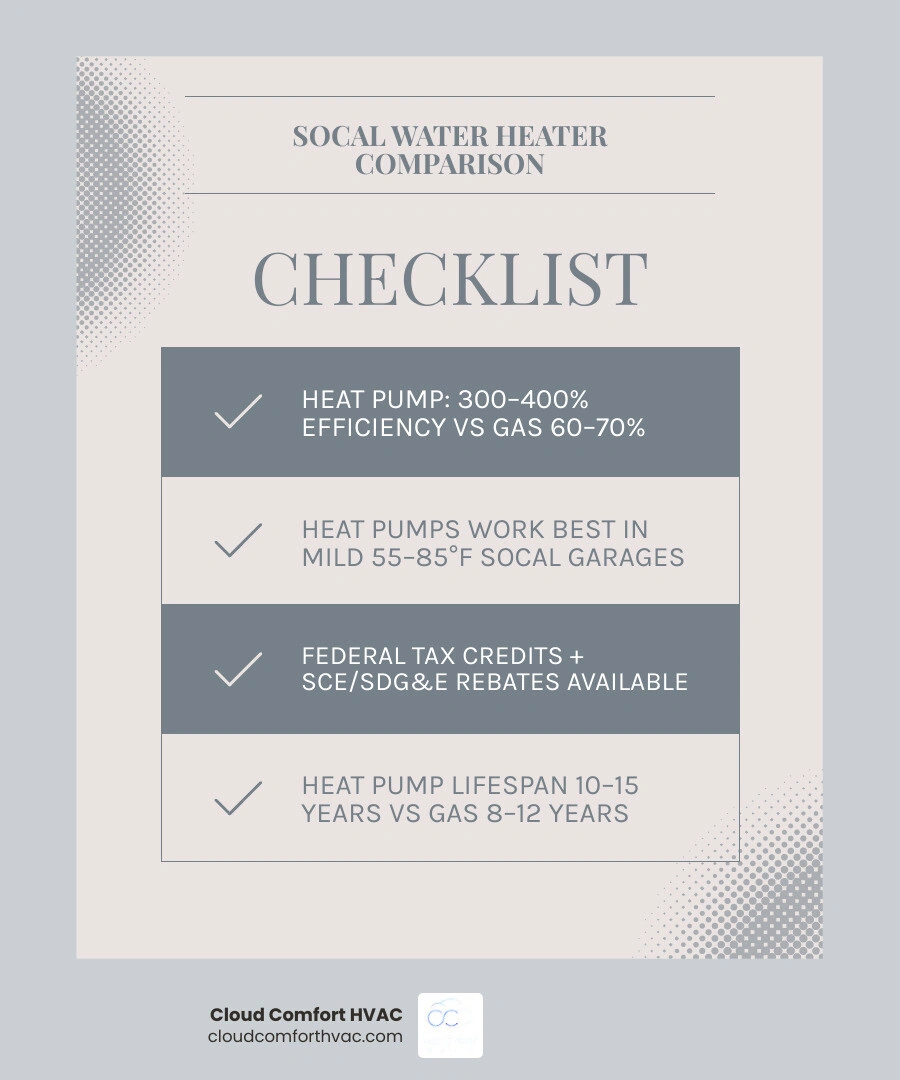
| Energy efficiency | 60–70% (UEF 0.60–0.70) | 300–400%+ (UEF 3.0–4.2) |
| Operating costs | Moderate | Lowest of any water heater type |
| Rebates available | Limited | Federal tax credits + SCE/SDG&E utility rebates |
| Installation complexity | Simple gas-for-gas swap | May require electrical work |
| Lifespan | 8–12 years | 10–15 years |
| Best overall for most SoCal homes | ✅ Heat pump (especially with existing garage space) |
Most homes in Southern California — whether in Torrance, Manhattan Beach, or Rancho Palos Verdes — have been running on natural gas water heaters for decades. They work, they're familiar, and replacing one with the same type is straightforward. But with rising utility rates and strong financial incentives now available, many homeowners are taking a closer look at heat pump water heaters as a smarter long-term move.
Southern California's mild climate is actually one of the best environments in the country for heat pump water heater performance. Because these systems pull heat from the surrounding air, the consistently warm temperatures in SoCal garages and utility spaces — often staying between 55°F and 85°F year-round — keep them running at peak efficiency almost every day of the year. That's a real advantage that homeowners in colder states simply don't have.
This guide breaks down everything you need to know — how each system works, what the installation looks like in a typical SoCal home, available rebates, and which option actually makes more sense for your household.
How Gas and Heat Pump Water Heaters Work
At the most basic level, the difference between these two systems comes down to how they handle heat transfer. A traditional gas system generates thermal energy through the combustion of natural gas. A heat pump system, on the other hand, does not create heat at all. Instead, it uses a small amount of electricity to capture existing heat from the ambient air and move it into the water tank.
Understanding this core operational difference is essential when planning a replacement. If you are beginning to notice signs of an aging system, our Water Heater Replacement Ultimate Guide provides a detailed roadmap of what to expect during the upgrade process.
How Gas Water Heaters Heat Your Water
Traditional gas water heaters rely on a relatively simple combustion process. When the temperature inside the storage tank drops below your set limit, a gas valve opens, and a burner at the bottom of the tank ignites.
The heat from this flame warms the bottom of the tank and rises through a central flue, which vents the combustion byproducts safely outside your home. While this design is highly reliable and provides rapid recovery times, it is inherently limited in its efficiency because a significant portion of the heat escapes directly through the ventilation system.
If you currently have a standard gas system and want to explore modern, high-efficiency gas alternatives, you can check out our dedicated services for a Gas Water Heater Torrance CA.
How Heat Pump Water Heaters Transfer Heat
A heat pump water heater — often called a hybrid water heater — works like a refrigerator operating in reverse. It utilizes a closed-loop refrigeration cycle consisting of four main stages:
- The Evaporator: A fan draws warm ambient air from the room across an evaporator coil containing a cold liquid refrigerant. The refrigerant absorbs the heat from the air and evaporates into a low-pressure gas.
- The Compressor: This gas passes through a compressor, which uses electricity to squeeze the refrigerant, dramatically raising its temperature and pressure.
- The Condenser: The hot, pressurized gas then travels through a condenser coil wrapped around the water tank, transferring its thermal energy directly into the water.
- The Expansion Valve: Having given up its heat, the refrigerant cools back into a liquid and passes through an expansion valve, resetting the cycle.
Because it only uses electricity to power the fan and compressor rather than to generate heat directly, this process is incredibly efficient. For homeowners looking to transition to this clean technology, we offer expert Heat Pump Installation Manhattan Beach CA to ensure your new system is perfectly calibrated for your home.
Gas Water Heater vs Heat Pump Water Heater: Which Is Right for a SoCal Home?
When choosing a gas water heater vs heat pump water heater which is right for a SoCal home, localized climate factors play a massive role. In coastal neighborhoods like Palos Verdes Estates or inland areas like Carson, our weather is highly favorable for heat pumps.
Unlike cold regions where heat pumps must work extra hard to extract warmth from freezing winter air, our mild Southern California winters mean your system will almost always operate in its most efficient mode.
| Feature | Gas Water Heater | Heat Pump Water Heater |
|---|---|---|
| Energy Source | Natural Gas | Electricity (Ambient Air Heat) |
| Recovery Rate | Fast (High hot water delivery per hour) | Slower (Relies on gradual heat transfer) |
| Venting Needs | Requires dedicated exhaust flue | No exhaust venting; releases cool, dry air |
| Environmental Impact | Produces localized carbon emissions | Zero direct emissions |
| Lifespan | 8 to 12 years | 10 to 15 years |
Comparing Efficiency: Gas Water Heater vs Heat Pump Water Heater Which Is Right for a SoCal Home
To truly understand the efficiency gap, we have to look at the Uniform Energy Factor (UEF). Traditional gas storage water heaters typically have a UEF between 0.60 and 0.70, meaning only 60% to 70% of the energy consumed actually goes toward heating your water. The rest is lost as waste heat through the flue. Even premium gas tankless systems top out at around 90% to 95% efficiency.
By contrast, heat pump water heaters regularly achieve UEF ratings between 3.0 and 4.2. This means they are 300% to 400% efficient — delivering three to four units of thermal energy for every single unit of electrical energy they consume. This massive leap in performance dramatically reduces carbon emissions and aligns perfectly with California's long-term environmental goals. You can read more about how these dynamics fit into home energy planning in our article on the Advantages of Heat Pumps for Energy Efficiency.
Installation and Space Requirements in Southern California
Because heat pump water heaters rely on extracting heat from the surrounding air, they have specific physical placement requirements that differ from standard gas units:
- Air Volume: A heat pump water heater generally requires a minimum of 450 to 700 cubic feet of clear air space to operate effectively. This makes a typical two-car garage in Culver City or Torrance an absolutely perfect installation site.
- Ventilation: If installed in a tight utility closet, the space must be louvered or ducted to allow proper air exchange, otherwise, the unit will quickly cool down its own room and lose efficiency.
- Condensate Drainage: As the heat pump cools the air, it naturally dehumidifies it. This moisture must be safely routed to a nearby floor drain, utility sink, or a small condensate pump.
- Electrical Upgrades: Standard gas water heaters only require a gas line and a basic venting flue. Upgrading to a heat pump means you will need a dedicated electrical circuit. While traditional units require a 240V circuit, modern 120V plug-in models are now available to simplify conversions without requiring major electrical work.
If you are wondering how these physical constraints apply to your specific garage or laundry room layout, our team specializes in custom layouts for Water Heater Installation Torrance CA.
Financial Incentives and Long-Term Savings for SoCal Homeowners
While transitioning from gas to electric can sometimes involve a more detailed initial setup, the long-term return on investment in Southern California is exceptionally strong. Thanks to federal policies like the Inflation Reduction Act, homeowners can take advantage of a substantial 30% federal tax credit for installing qualifying energy-efficient heat pump water heaters.
Additionally, local utility programs across Southern California offer generous instant rebates to help offset the cost of switching from a natural gas tank to an eco-friendly heat pump. When you pair these upfront incentives with the ongoing reduction in your monthly utility bills, the payback period for a heat pump system is remarkably short.
To maximize these savings, it is crucial to work with a licensed contractor who knows how to properly file and stack these incentives. We regularly help our clients navigate these programs during a Water Heater Replacement Manhattan Beach CA.
Choosing the Best Option for Your Household Size and Lifestyle
Your household's daily routine and hot water demand are key factors in determining which water heater type will keep your family comfortable.

Gas water heaters are known for their rapid recovery rates. If you have a large family in Palos Verdes Estates with multiple showers running back-to-back in the morning, a gas system can quickly reheat the tank to keep up with the heavy demand.
Heat pump water heaters heat water more gradually. To prevent running out of hot water during peak usage, we often recommend "sizing up" the tank. For example, if your home would normally use a 50-gallon gas water heater, upgrading to a 65-gallon or 80-gallon heat pump model ensures you have plenty of storage capacity without ever needing to rely on less-efficient backup heating elements.
If your current system is struggling to keep up with your daily needs, it may simply need a professional tune-up or a minor repair. You can learn more about keeping your system running smoothly by visiting our page on Water Heater Repair Torrance CA.
Making the Decision: Gas Water Heater vs Heat Pump Water Heater Which Is Right for a SoCal Home
Deciding on a gas water heater vs heat pump water heater which is right for a SoCal home comes down to your home's existing infrastructure and your personal priorities:
- Choose a Gas Water Heater if: You have limited physical space (such as a tiny indoor closet), your home has a highly active hot water demand that requires immediate recovery, or you want a straightforward, direct replacement of your existing gas system.
- Choose a Heat Pump Water Heater if: You want the absolute lowest monthly operating costs, you are looking to pair the system with home solar panels to achieve near-zero utility bills, you want to eliminate natural gas combustion from inside your home, or you want to take advantage of current state and federal rebates.
For a deeper dive into how making the switch to electric appliances benefits your overall home comfort and carbon footprint, explore our guide on the Top 5 Reasons to Buy a Heat Pump System.
Frequently Asked Questions about SoCal Water Heaters
Do heat pump water heaters work well in the Southern California climate?
Yes, exceptionally well. In fact, Southern California has one of the best climates in the country for this technology. Because our coastal and inland temperatures rarely drop below freezing, the heat pump can easily extract thermal energy from the air year-round. This consistent warmth allows the system to operate in its most efficient "heat pump only" mode almost 100% of the time, resulting in maximum energy savings.
What are the maintenance differences between gas and heat pump models?
Both systems require basic annual maintenance to ensure long-term performance, but their needs differ slightly:
- Gas Models: Require annual tank flushing to remove mineral deposits (especially important due to the hard water common in areas like Carson and Torrance). It is also important to periodically inspect the burner assembly and check the sacrificial anode rod.
- Heat Pump Models: Also require regular tank flushing. However, because they use an air-source compressor, they also feature an easily accessible air filter that needs to be slid out and rinsed off every 6 to 12 months to maintain proper airflow.
To understand why protecting your tank from internal corrosion is so critical, read our detailed breakdown of the Water Heater Anode Rod.
Will I need to upgrade my electrical panel to install a heat pump water heater?
Not necessarily. While traditional 240V hybrid water heaters require a dedicated 30-amp circuit, many manufacturers now offer specialized 120V "plug-in" heat pump water heaters. These innovative systems are designed specifically for gas-to-electric retrofits, allowing them to plug directly into a standard household outlet. This completely eliminates the need for an expensive electrical panel upgrade in older homes.
Conclusion
Selecting the right water heater is a major decision that impacts your home's comfort, monthly utility bills, and environmental footprint for the next decade or more. Whether you decide that a high-efficiency gas system is the most practical choice for your family's high hot water demand, or you want to embrace the future of home electrification with an ultra-efficient heat pump, professional installation is the key to maximizing your system's lifespan and safety.
At Cloud Comfort HVAC, our friendly, expert team is dedicated to providing honest advice, transparent pricing, and top-tier workmanship across Rancho Palos Verdes, Manhattan Beach, Culver City, Torrance, Palos Verdes Estates, and Carson. We are here to help you evaluate your home's unique layout, calculate your potential energy savings, and guide you through every step of the installation process.
Ready to find the perfect water heating solution for your home? Contact us today to schedule your personalized in-home assessment, or explore our specialized services for a Gas Water Heater Huntington Beach CA.
Have an HVAC or plumbing question?
Our Torrance comfort experts are here to help — no pressure, just honest answers.
Ask an Expert