How to Check if AC Refrigerant Is Low: Essential Guide
July 24, 2026

Is Your AC Struggling to Keep Cool This Summer? It Might Be Low on Refrigerant
Knowing how to check if AC refrigerant is low before calling a technician can save you time, money, and a lot of unnecessary stress — especially during a South Bay summer. Here is a quick overview of what to look for right now:
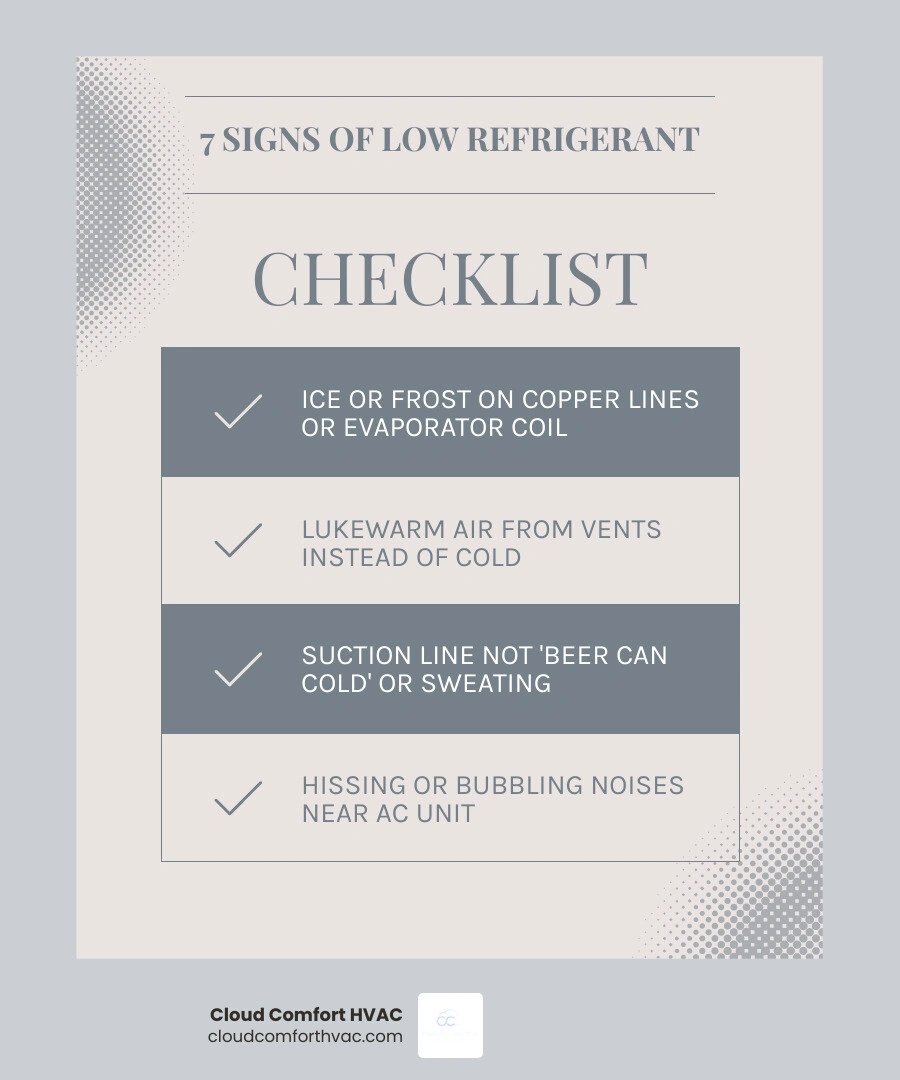
- Check for ice or frost on the copper lines or indoor evaporator coil
- Feel the air from your vents — it should be noticeably cold, not lukewarm
- Touch the large copper suction line on the outdoor unit — it should feel "beer can cold" and be sweating
- Listen for hissing or bubbling sounds near the indoor or outdoor unit
- Measure your Delta T — the temperature difference between return and supply air should be 12–15°F
- Check for water pooling near your indoor air handler, which can signal a frozen coil that has thawed
- Replace your air filter first — a clogged filter mimics refrigerant symptoms almost perfectly
If you notice several of these signs at once, there is a good chance your system is low on charge. But before you assume the worst, a few simple checks can help you figure out whether you actually need a technician — or just a new filter.
I'm Isidro Davalos, and in this guide I'll walk you through exactly how to diagnose low refrigerant symptoms safely and confidently before picking up the phone.
Quick how to check if ac refrigerant is low before calling a technician terms:
- AC troubleshooting before calling a pro
- AC not cooling but running what to check first in the South Bay
- AC keeps turning on and off what is wrong
Why Proper Refrigerant Levels Matter for Your Home's Comfort
To understand why low refrigerant is such a big deal, we have to bust a very common myth: your air conditioner does not actually "use up" or consume refrigerant the way a car burns through gasoline.
An air conditioning system is a completely sealed, closed-loop system. The refrigerant inside is a chemical heat-transfer fluid that continuously circulates between your indoor evaporator coil and your outdoor condenser unit. It absorbs heat from inside your home, carries it outside, dumps it into the outdoor air, and returns to do it all over again.
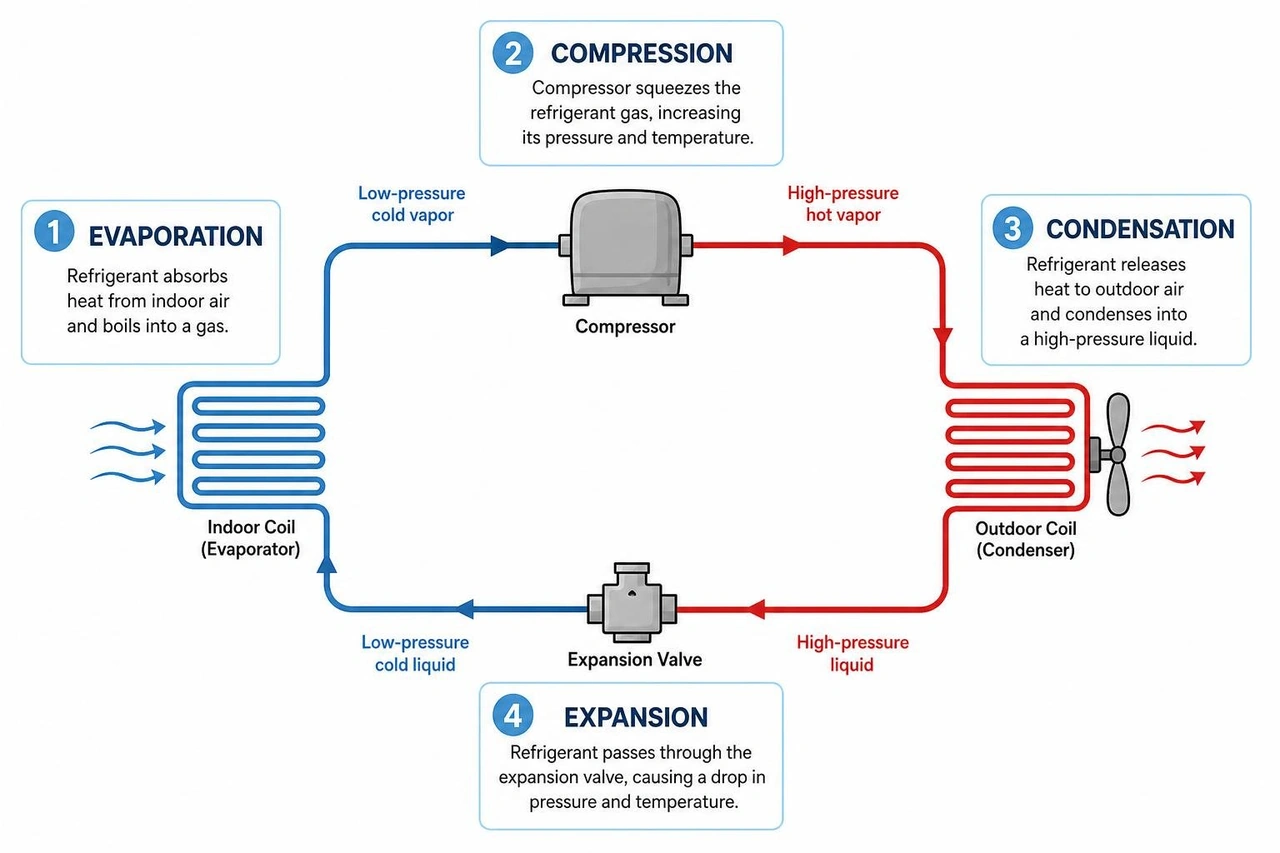
When your system is running on a low charge, several bad things happen simultaneously:
- Significant Efficiency Loss: According to the EPA, incorrect refrigerant levels can reduce your AC's efficiency by as much as 5% to 20%. This means your system works harder, runs longer, and drives up your monthly Southern California Edison or SoCalGas utility bills.
- Inability to Cool: Because there is less chemical fluid to absorb heat, the air blowing out of your supply vents will transition from crisp and cold to lukewarm or warm.
- Catastrophic Compressor Damage: The compressor is the heart of your HVAC system, and it relies on the cool, gaseous refrigerant returning from the indoor coil to keep itself from overheating. Without enough refrigerant, the compressor will run extremely hot and eventually burn out.
- Liquid Slugging: When a system is undercharged, the pressure drops, which can cause the indoor coil to freeze solid. When that ice eventually melts or if the system cycles abnormally, unvaporized liquid refrigerant can travel back down the line into the compressor. Because liquids cannot be compressed, this "liquid slugging" can physically shatter the pistons or scroll sets inside your compressor, instantly destroying the most expensive component in your system.
If you are dealing with an aging AC unit that frequently leaks, you may find yourself weighing your options. Our AC Repair vs Replace Decision Guide can help you determine if a simple leak repair is worth it or if it is time to upgrade to a more reliable, energy-efficient system.
How to Check if AC Refrigerant Is Low Before Calling a Technician
While only a licensed, EPA-certified professional can legally connect gauges and add refrigerant to your system, you can easily perform some initial DIY troubleshooting. This helps you rule out minor issues like a dirty air filter and gives you valuable data to share with us when you call.
Before you start, keep these safety boundaries and physical rules in mind:
- Never open the refrigerant lines yourself: The chemical refrigerant is under immense pressure and can cause severe chemical burns or frostbite upon contact with bare skin.
- Test only when it is warm enough: To get accurate visual and physical readings, the outdoor temperature should be at least 70°F. If it is cooler than that outside, there is not enough thermal load on the system to properly evaluate how the refrigerant is behaving.
By taking ten minutes to perform these simple checks, you can prevent unnecessary diagnostic fees and keep local HVAC schedules open for true emergencies.
Step 1: How to Check if AC Refrigerant Is Low Before Calling a Technician Using Visual Signs
You do not need specialized HVAC tools to spot a physical issue. Start by walking around your home and checking for these visual warning signs:
- Ice on the Copper Lines: Look at the outdoor condenser unit. You will see two copper lines running from the house into the unit. One is smaller and bare; the other is larger and covered in black foam insulation. If you see white, frosty ice or snow-like buildup on either line, your system is freezing up.
- Frozen Indoor Evaporator Coil: If you have access to your indoor air handler or furnace closet, look closely at the sheet metal cabinet. If you see ice forming on the brass valves, the exterior of the coil, or dripping down the side of the plenum, the coil is frozen. For a deeper look at why this happens, check out our article on Why Is AC Freezing Up in the Summer Heat.
- Water Leaks and Pooling: When an evaporator coil freezes solid, it eventually has to melt. This sudden rush of water often overflows the condensate drain pan, leading to water pooling around your indoor furnace, air handler, or closet floor.
- Oily Spots on Copper Joints: Refrigerant is mixed with a special lubricating oil that keeps the compressor running smoothly. When refrigerant leaks out of a tiny pinhole crack, it carries a small amount of this oil with it. Inspect the copper joints, service valves, and the area under your outdoor cabinet. If you notice greasy, dark, or damp oily spots that collect dirt, you have likely found the physical location of a refrigerant leak.
Step 2: How to Check if AC Refrigerant Is Low Before Calling a Technician with Temperature Tests
One of the most reliable ways to evaluate your system's performance without gauges is by checking the temperature of the air and the copper lines.
The Delta T (Temperature Split) Test
The "Delta T" is simply the temperature difference between the warm air entering your system and the cold air blowing out. Here is how to perform this test using a basic digital or infrared laser thermometer:
- Make sure your AC has been running continuously for at least 15 to 20 minutes so the system pressures have stabilized.
- Locate the return air vent (where your air filter is usually located) and measure the temperature of the air entering the grille.
- Locate the supply register (the vent blowing cold air) that is closest to your indoor blower unit and measure the temperature of the air coming out.
- Subtract the supply temperature from the return temperature.
A properly charged, healthy AC system should show a temperature difference (Delta T) of 12 to 15 degrees (and up to 18 to 22 degrees in optimal coastal conditions) between the return air and supply air. If your Delta T is significantly lower than 12 degrees (for example, a split of only 5 or 6 degrees), your system is not absorbing heat properly, which strongly points to a low refrigerant charge.
Conversely, if your Delta T is unusually high (above 25 degrees), this actually points to a severe airflow restriction rather than a refrigerant issue. For more context on diagnosing this, see our guide on AC Not Cooling But Running What to Check First in the South Bay.
The "Beer Can Cold" Touch Test
Another classic industry rule of thumb is checking the larger, insulated copper pipe (the suction line) at the outdoor unit. Carefully place your hand on the exposed brass valve or the copper line where the insulation ends:
- Normal: The line should feel as cold and wet as a fresh can of soda pulled from a cooler ("beer can cold") and should have visible condensation (sweat) on it.
- Abnormal: If the line is warm to the touch, dry, or covered in solid ice, your refrigerant levels are incorrect.
Step 3: Listen for Auditory Clues and Check Airflow
Your senses of hearing and touch can tell you a lot about what is happening inside those sealed copper lines.
- Hissing Sounds: A high-pressure gaseous refrigerant leak often sounds like air slowly escaping a bicycle tire or a can of soda fizzing. If you hear a distinct, constant hissing sound coming from your indoor closet or near the outdoor unit while the AC is running or right after it shuts off, you are likely hearing refrigerant escaping.
- Bubbling or Gurgling Noises: If the leak is located in a section of the line set carrying liquid refrigerant, it will often make a bubbling, gurgling, or whistling sound as pockets of gas form in the liquid line. If you hear these strange noises, check out our guide on Why Is AC Making High Pitched Whistling Sound to help narrow down the cause.
- Weak Airflow: When your evaporator coil begins to freeze due to low refrigerant, the physical ice blocks the air from passing through the coil's metal fins. You will notice that the air blowing out of your registers feels incredibly weak, even though you can hear the indoor blower fan running at full speed.
Low Refrigerant vs. A Dirty Air Filter: How to Tell the Difference
Before you schedule an AC repair, it is crucial to rule out a dirty air filter. A severely clogged air filter restricts airflow so much that the indoor evaporator coil does not get enough warm air to keep it from freezing. This creates symptoms that mimic low refrigerant almost perfectly, leading many homeowners to assume they have a leak when they really just need a new filter.
Here is a quick reference table to help you differentiate between the two:
| Symptom | Low Refrigerant Charge | Clogged Air Filter |
|---|---|---|
| Air Temperature from Vents | Lukewarm or warm | Cold, but very weak airflow |
| Indoor Coil / Line Set Ice | Yes, starting at the expansion valve | Yes, due to restricted airflow |
| Delta T (Temperature Split) | Unusually low (under 12°F) | Unusually high (over 25°F) |
| Sounds Near the Unit | Hissing or bubbling noises | High-pitched whistling or air whistling |
| Oily Residue on Copper | Often present near leak points | None |
| How to Fix It | Requires professional leak repair | Replace filter and let coil thaw |
If you want to keep your system running smoothly and avoid these common diagnostic mix-ups, check out our comprehensive AC Tune-Up Guide to learn how simple maintenance keeps your system running at peak performance.
The Technical Side: How Professionals Measure Refrigerant Pressure

When our technicians arrive at your home in Torrance, Manhattan Beach, or Rancho Palos Verdes, we do not guess about your refrigerant levels. We use a professional manifold gauge set, digital pipe clamps, and pressure-temperature (PT) charts to calculate exactly how your system is performing.
Here is a look at what happens behind the scenes during a professional refrigerant diagnostic check:
- Connecting the Gauges: The blue hose of the manifold gauge set connects to the low-side service port (suction line), and the red hose connects to the high-side service port (liquid line).
- Reading the Pressures: We measure the pressures in PSI (Pounds per Square Inch). These pressures vary significantly depending on the type of refrigerant your system uses:
- R-410A Systems (Modern): For a typical R-410A system running in normal summer conditions, the low-side pressure should generally run between 125 and 135 PSI, while the high-side pressure should range between 340 and 380 PSI.
- R-22 Systems (Older/Phased-Out): For older systems running on R-22 (Freon), typical pressures run much lower — around 70 PSI on the low side and 200 PSI on the high side.
- Superheat and Subcooling Calculations: Pressures alone do not tell the whole story because they fluctuate with the outdoor temperature. To find the exact charge, we attach temperature clamps to the copper lines to measure the actual line temperature. We then calculate "Superheat" (for fixed-orifice expansion devices) or "Subcooling" (for thermostatic expansion valves) to ensure the system is charged to the manufacturer's exact specifications.
- EPA Section 608 Compliance: Under Section 608 of the Clean Air Act, it is legally mandated that anyone connecting gauges, handling, or purchasing chemical refrigerants must hold an active EPA certification. This ensures that these potent greenhouse gases are never intentionally vented into the atmosphere.
If our diagnostic check confirms your system is low, the next step is finding the source of the leak. You can read more about how we locate and repair these issues in our guide on How to Troubleshoot AC Refrigerant Leaks.
Frequently Asked Questions About AC Refrigerant
Can I legally or safely add refrigerant to my AC system myself?
No. Under EPA Section 608 regulations, only certified HVAC professionals are legally permitted to purchase, handle, and add chemical refrigerants to air conditioning systems.
Beyond the legal restrictions, handling refrigerant without proper training and equipment carries significant safety hazards, including severe frostbite, chemical burns, and respiratory risks.
Additionally, refrigerants have a high Global Warming Potential (GWP). For example, older R-22 has a GWP of 1,810 and damages the ozone layer, while R-410A has a GWP of 2,088. Modern systems are transitioning to eco-friendly options like R-32, which has a GWP of just 675, making it significantly better for our environment.
How often should an AC need a refrigerant recharge?
Under normal operating conditions, an AC system should never need to be recharged or topped off. Because it is a sealed, closed-loop system, the refrigerant charge should remain constant for the entire lifespan of the unit.
If your system is low on refrigerant, it means there is a physical leak somewhere in the copper lines, service valves, or evaporator coil. Simply adding more refrigerant without finding and fixing the leak is a temporary fix that wastes money and harms the environment.
In coastal Southern California areas like Hermosa Beach, Redondo Beach, and Huntington Beach, salt air can cause formicary corrosion — microscopic pinhole leaks in copper coils. Regular maintenance is the best way to catch these issues early. Read more in our guide on 9 Reasons to Get Professional Air Conditioner Maintenance in California.
Why does low refrigerant cause ice to form on the coils?
It seems completely backward: why would less cooling fluid cause your system to freeze up into a block of ice?
It all comes down to physics. When the refrigerant charge drops, the pressure inside the indoor evaporator coil drops along with it. In the HVAC world, lower pressure means lower temperature.
When the pressure drops too low, the temperature of the physical metal coil drops well below the freezing point (32°F). As the warm, humid air from your home passes over this freezing metal coil, the natural moisture in the air condenses onto the metal and instantly freezes solid. Over several hours, this thin layer of frost builds up into a thick sheet of ice, completely blocking airflow and stopping all cooling.
Conclusion
If you have walked through these diagnostic steps and suspect your air conditioner is low on refrigerant, do not wait for the system to break down completely or cause permanent damage to your compressor. Running an undercharged system is a recipe for high utility bills and costly component failures.
At Cloud Comfort HVAC, we provide expert, eco-friendly cooling solutions to homeowners across the South Bay and surrounding areas, including Rancho Palos Verdes, Torrance, Manhattan Beach, Carson, Redondo Beach, and Palos Verdes Estates.
We stand behind our work with our signature 1-year Comfort Promise, transparent pricing, and industry-leading Daikin warranties to ensure your home stays perfectly comfortable all year long.
If your system is blowing lukewarm air, freezing up, or making strange sounds, let our team of friendly, local experts help. Visit our AC Repair page today to schedule your professional diagnostic visit, and let us restore your home's cool comfort!
Have an HVAC or plumbing question?
Our Torrance comfort experts are here to help — no pressure, just honest answers.
Ask an Expert