AC Not Cooling But Running What to Check First in the South Bay
July 17, 2026

Why Your AC Is Running But Not Cooling in the South Bay — and What to Check First
If you're dealing with ac not cooling but running what to check first in the south bay is probably the most urgent question on your mind — especially when a summer heat wave hits cities like Torrance, Manhattan Beach, or Rancho Palos Verdes. The frustrating part is that the system sounds like it's working. The fan is running. The unit is humming. But the air coming out just isn't cold.
Before you call for a repair, here are the first things to check:
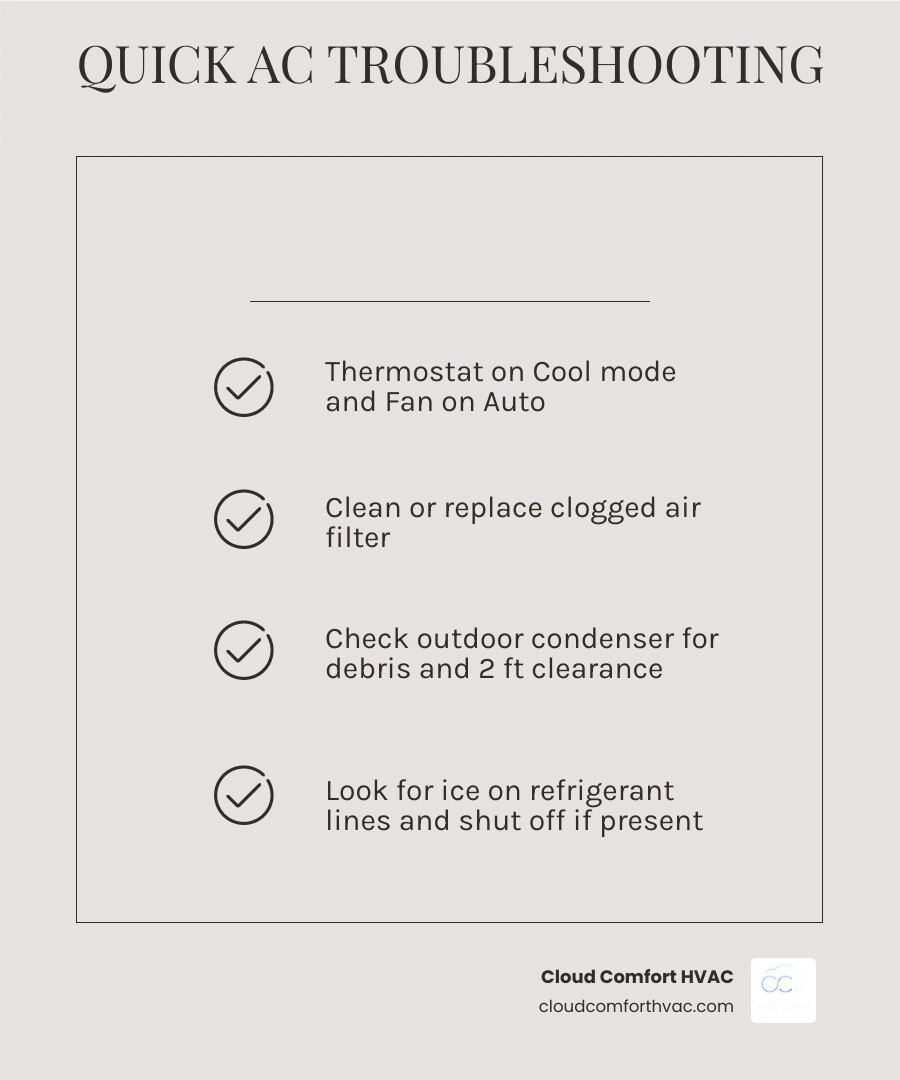
- Thermostat settings — Make sure it's set to "Cool" mode with the fan on "Auto," not "On"
- Air filter — A clogged filter is the single most common cause of AC cooling failure
- Supply vents and return grilles — Check that none are blocked by furniture or closed off
- Outdoor condenser unit — Look for debris buildup, a non-spinning fan, or tripped breaker
- Ice on the refrigerant lines — Visible ice means shut the system off immediately
- Circuit breaker — Check the electrical panel for a tripped AC breaker
The South Bay's unique mix of coastal humidity, summer heat spikes, and salty ocean air puts extra stress on residential AC systems. That humidity can accelerate evaporator coil freeze-over, while salt air corrodes condenser fins faster than in inland areas. On the hottest days, even a healthy system may struggle to keep your home more than 20 degrees cooler than the outside temperature — so knowing the difference between a struggling system and a failing one matters.
The good news is that a surprising number of "no-cool" calls get resolved with simple checks that take less than five minutes. This guide walks you through exactly what to look at, in order of likelihood, so you can fix what you can — and know when it's time to call a pro.
Ac not cooling but running what to check first in the south bay word list:
- ac keeps turning on and off what is wrong
- ac troubleshooting before calling a pro
- circuit breaker tripping when ac turns on what to do in a socal home
AC Not Cooling But Running What to Check First in the South Bay
When your air conditioner runs continuously but fails to lower the indoor temperature, it is essential to follow a systematic troubleshooting process. In coastal Southern California, we often see homes where the system has been running hard for weeks during a late-summer heatwave, only to suddenly stop producing cold air.
Before assuming you need a complete system overhaul, starting with a basic diagnostic path can save you both time and stress. Homeowners can resolve about 12% to 15% of all cooling issues simply by running through a quick five-minute check. This initial inspection keeps you from paying for a service call when the issue is as simple as a bumped switch or a forgotten filter. For a complete look at these early steps, you can read our detailed guide on AC Troubleshooting Before Calling a Pro.
Thermostat Settings: AC Not Cooling But Running What to Check First in the South Bay
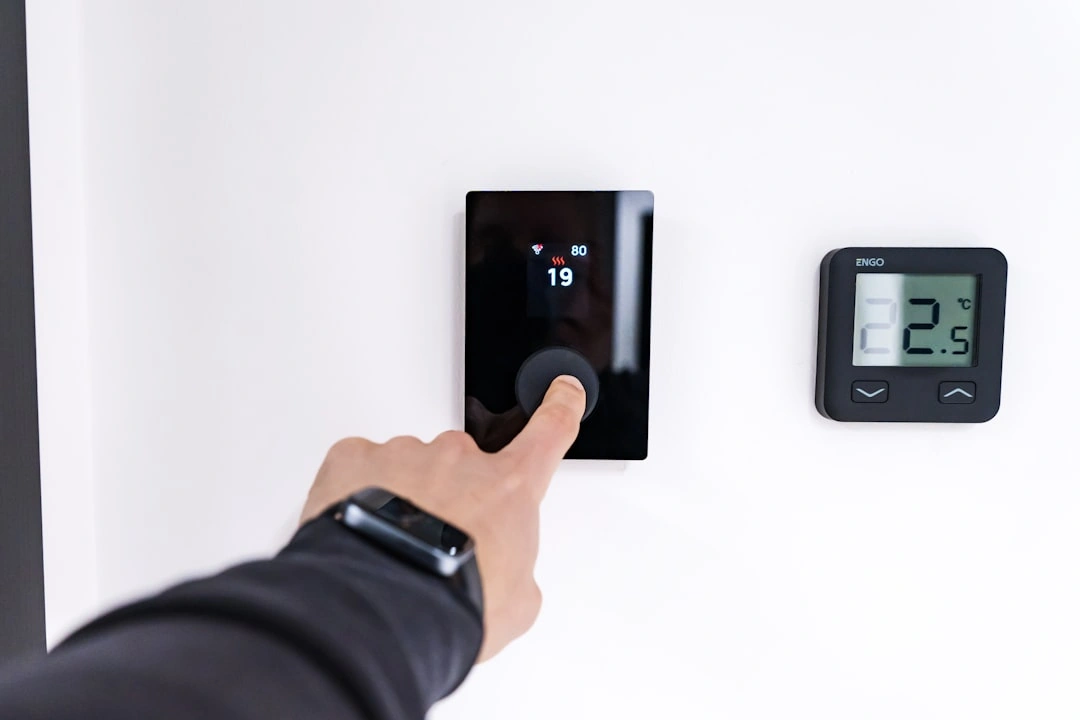
The very first point of evaluation is your thermostat. While it seems obvious, thermostat settings are frequently altered by accident during routine house cleaning, power flickers, or by family members adjusting the temperature.
To properly inspect your thermostat settings, verify the following:
- The System Mode: Ensure the thermostat is set explicitly to "Cool." During seasonal transitions in the South Bay, it is easy to leave the system in "Heat" or "Off" mode.
- The Fan Setting: This is a crucial distinction. Ensure your fan is set to Auto rather than On. When the fan is set to "On," the indoor blower runs continuously, even when the outdoor compressor cycles off. This means the system will blow uncooled, humid air through your vents between cooling cycles, making your home feel warm and clammy. Setting the fan to "Auto" ensures it only blows air when active cooling is taking place.
- The Temperature Set Point: Set the target temperature at least 5 degrees below the current room temperature to trigger a cooling demand.
- Batteries: If your thermostat has a blank or fading display, replace the batteries immediately. Low batteries can cause communication failures between the thermostat and the HVAC control board, leaving your indoor blower running while failing to signal the outdoor condenser to turn on.
If your system is blowing room-temperature air despite correct settings, you can explore further steps in our article on What to Do When AC is Blowing Warm Air.
Airflow and Filters: AC Not Cooling But Running What to Check First in the South Bay
Airflow is the lifeblood of your air conditioning system. A severe restriction in airflow is responsible for roughly nine out of ten service calls for poor cooling performance. When air cannot flow freely through your system, the heat exchange process fails entirely.
The primary culprit is a clogged air filter. Over time, air filters collect dust, pet dander, and coastal pollen. During periods of heavy use, standard 1-inch filters can become completely blocked in as little as 30 days. To test if your filter is clogged, hold it up to a light source. If no light passes through the fibers, the filter is dirty and must be replaced immediately. Replacing a clogged filter can improve your system's energy efficiency by 5% to 15% and prevent severe system strain. You can learn how to manage this simple task through our guide on AC Filter Replacement.
Beyond the filter, you must inspect your home's vents and grilles. Ensure that:
- All supply registers are fully open.
- No return grilles are blocked by furniture, heavy drapes, or dog beds.
- You are not closing vents in unused rooms. There is a common myth that closing vents saves energy, but it actually creates dangerous pressure imbalances, reduces system airflow, and can cause your evaporator coil to freeze or your ductwork to leak.
Troubleshooting the Outdoor Condenser and Electrical Components
If your indoor blower is running and pushing air through your vents, but that air is warm, the problem likely lies with your outdoor condenser unit. The outdoor unit's job is to release the heat collected from inside your home into the outdoor air. If this unit cannot run or is restricted, heat remains trapped inside your living spaces.
For residents living in Torrance, Hermosa Beach, or Manhattan Beach, local environmental factors like salt air, marine layer moisture, and coastal vegetation can directly impact how your outdoor unit functions. To restore proper operation, professional assistance is often required. You can schedule a comprehensive evaluation through our AC Service Torrance CA page.
Checking the Condenser Unit and Coils
Your outdoor condenser coil contains aluminum fins that dissipate heat. If these fins are covered in dirt, lawn clippings, coastal salt deposits, or overgrown garden foliage, they cannot release heat effectively.
To safely inspect and maintain your outdoor unit, follow these steps:
- Maintain Clearance: Ensure there is at least a 2-foot clear perimeter around the entire outdoor unit. Trim back any coastal shrubs, ivy, or potted plants that might restrict airflow.
- Clear Debris: Carefully remove any leaves, twigs, or windblown trash from the base of the unit.
- Gently Clean Coils: Turn off the power to your AC system at the thermostat and the outdoor disconnect box. Using a gentle garden hose (never a pressure washer, which will bend and destroy the delicate aluminum fins), rinse the condenser coils from top to bottom to wash away salt crust and dust.
Regularly keeping this area clear prevents the compressor from overheating and shutting down on hot days. To ensure your outdoor unit is operating efficiently year-round, consider scheduling routine care via our AC Maintenance Torrance CA page.
Electrical Issues: Capacitors and Breakers
If you walk outside and find that the outdoor unit is completely silent—or making a faint humming or clicking sound while the fan remains still—you are likely dealing with an electrical failure.
The most common electrical issues include:
- Failed Capacitor: The capacitor acts like a temporary battery, providing the high-voltage electrical boost needed to start the compressor and fan motor. In Southern California, the intense summer heat causes capacitors (which are often rated to last 10 to 15 years) to fail in just 4 to 7 years. A failed capacitor accounts for roughly 25% to 30% of all summer emergency cooling calls.
- Tripped Circuit Breaker: Your AC system runs on high voltage and has two separate breakers: one for the indoor blower and one for the outdoor condenser. If the outdoor breaker trips, the indoor fan will continue to run and blow warm air, while the outdoor unit remains powerless. You can reset a tripped breaker once at your main electrical panel. However, if it trips a second time, do not attempt to reset it again. A repeatedly tripping breaker indicates a serious electrical short or a failing compressor.
- Worn Contactor: The contactor is an electrical switch that closes to send power to the compressor. Over time, the contacts can pit, burn, or stick, preventing the outdoor unit from starting.
If your system is shutting down unexpectedly or experiencing electrical issues, you can seek expert diagnostic help through our AC Repair Manhattan Beach CA team.
Recognizing Refrigerant Leaks and Frozen Evaporator Coils
When an air conditioner runs continuously without cooling, the root cause is often found within the refrigeration cycle itself. Your AC does not "use up" refrigerant like a car uses gasoline; instead, it circulates refrigerant through a closed-loop system of copper lines to absorb and release heat. If this loop is compromised, your system will struggle to cool.
When issues like low refrigerant or frozen coils arise, they require prompt professional attention to avoid permanent system damage. Our specialized technicians can help restore your system's balance; learn more on our AC Repair Hermosa Beach CA service page.
Signs of Low Refrigerant
A low refrigerant charge is a direct indicator of a refrigerant leak. Operating a system with low refrigerant can lead to compressor failure, as the compressor relies on the returning refrigerant to keep it cool.
Common signs of a refrigerant leak in your South Bay home include:
- Lukewarm Air: The air coming from your supply vents is barely cool or completely warm.
- Hissing or Bubbling Sounds: A distinct hissing or bubbling noise near the indoor evaporator coil or the outdoor refrigerant lines indicates pressurized gas escaping through a hole or crack.
- Sweet Chemical Smell: Modern refrigerants like R-410A or R-32 have a faint, sweet chemical odor. If you notice this smell near your indoor air handler, evacuate the immediate area and call a professional.
- Ice Formation: As refrigerant levels drop, the pressure inside the evaporator coil plunges, causing the moisture in the air to instantly freeze on the coil's surface.
If you suspect a leak, a professional pressure test is required. You can schedule a comprehensive system evaluation on our AC Performance Check page.
Thawing a Frozen Evaporator Coil
A frozen evaporator coil is behind roughly 30% of all "AC not cooling" service calls. When ice accumulates on the indoor coil, it acts as an insulating barrier, preventing the refrigerant from absorbing heat from your indoor air.
If you notice ice on your indoor coil or the brass valves on your outdoor unit, you must follow these steps immediately to thaw the system safely:
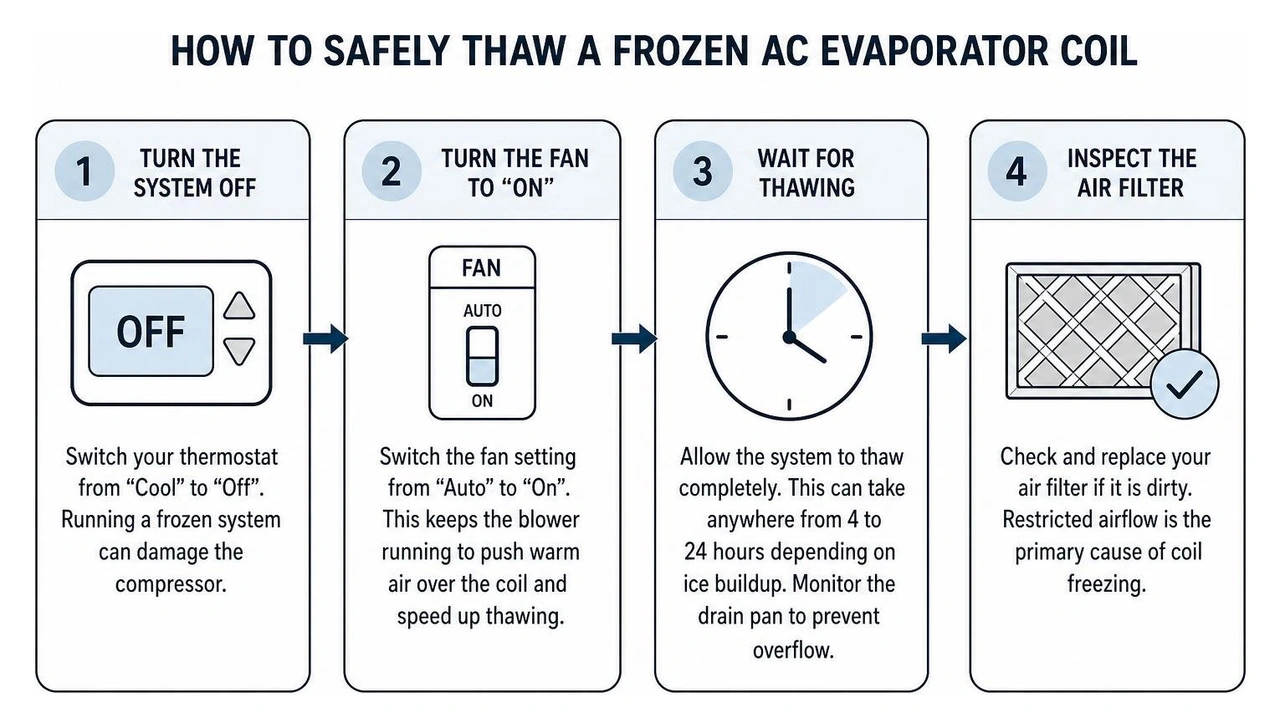
- Turn the System Off: Switch your thermostat from "Cool" to "Off." Running a frozen system can cause liquid refrigerant to enter the compressor (a destructive process known as "slugging"), which can permanently destroy the compressor motor.
- Turn the Fan to "On": Switch the fan setting from "Auto" to "On." This keeps the indoor blower running, forcing warm indoor air over the frozen coil to accelerate the melting process.
- Wait for Thawing: Allow the system to thaw completely. This process typically takes anywhere from 4 to 24 hours depending on the severity of the ice buildup. Keep an eye on your condensate drain pan to ensure it does not overflow as the ice melts.
- Inspect the Air Filter: While the system thaws, check and replace your air filter if it is dirty, as restricted airflow is the primary cause of coil freezing.
Once the system is fully thawed and clean, you can schedule a professional tune-up to identify why it froze in the first place. For more preventive tips, check out our comprehensive AC Tune Up Guide.
Frequently Asked Questions About South Bay AC Troubleshooting
Navigating air conditioning issues can be confusing. To help you understand what is happening with your system, we have compiled answers to the most common questions we receive from South Bay homeowners.
To help you decide whether your current AC issue is a simple fix or requires expert diagnostic tools, refer to the comparison table below:
| Diagnostic Check | DIY Actionable Steps | Professional HVAC Intervention Required |
|---|---|---|
| Thermostat Operation | Check batteries, set to Cool, set fan to Auto | Calibrate sensors, repair control board wiring |
| Airflow Issues | Replace air filter, clear blocked registers | Clean blower wheel, repair collapsed ductwork |
| Condenser Maintenance | Clear 2-foot clearance, gently rinse coils | Chemically clean coils, repair bent aluminum fins |
| Electrical Failures | Reset circuit breaker once | Replace failed capacitor, contactor, or wiring |
| Refrigerant Issues | None (illegal and dangerous to perform DIY) | Perform leak detection, repair leak, recharge R-410A/R-32 |
| Frozen Evaporator Coil | Turn system off, run fan on "On" to thaw | Diagnose blower motor failure, fix thermal expansion valve |
Why is my AC running but the temperature isn't dropping?
This issue typically indicates a partial system failure. While your indoor blower motor is running and pushing air through the home, the outdoor unit is either not running at all or is running at a severely reduced capacity. This can be caused by a failed capacitor, a tripped outdoor circuit breaker, a failing compressor, or a heavily clogged condenser coil that prevents heat from escaping. If you are experiencing this in coastal areas, you can request an expert technician through our AC Service Hermosa Beach CA team.
Should I turn off my AC if it isn't blowing cold air?
Yes, absolutely. If your air conditioner is running but not producing cold air, you should turn the system off at the thermostat immediately. Continuing to run a malfunctioning AC puts extreme mechanical strain on the compressor. If the issue is a frozen coil, running the system can lead to liquid refrigerant returning to the compressor, causing permanent compressor failure. Turning the system off protects your most expensive components. If you need urgent assistance, contact our team for AC Repair Torrance CA.
How long should it take for my AC to cool my house?
Under normal operating conditions, a healthy and properly sized air conditioning system should lower your indoor temperature by approximately 1 degree per hour. On exceptionally hot days (when temperatures exceed 90 degrees in the South Bay), your AC may struggle to keep the house more than 20 degrees cooler than the outside air. If your system is taking significantly longer to cool, or if it runs continuously without ever reaching your thermostat set point on a mild day, it is time to schedule an AC Tune Up Torrance CA to restore its efficiency.
Conclusion
When your air conditioner runs but fails to cool your home, running through a few basic checks can help you identify simple fixes like a dirty filter or incorrect thermostat settings. However, when the problem involves complex electrical components, refrigerant leaks, or a frozen evaporator coil, attempting to fix it yourself can lead to further damage or safety hazards.
At Cloud Comfort HVAC, we are dedicated to keeping South Bay families comfortable with eco-friendly, highly efficient home comfort solutions. We serve homeowners throughout Torrance, Manhattan Beach, Redondo Beach, Hermosa Beach, Rancho Palos Verdes, Palos Verdes Estates, Carson, and Culver City. As a trusted Daikin dealer, we provide industry-leading warranties and a 1-year Comfort Promise on our installations, ensuring you receive reliable, transparent, and expert service every time we visit.
If your DIY checks didn't restore the cool breeze to your home, do not wait for a minor issue to turn into an expensive compressor failure. Contact us today to schedule your professional AC Repair and let our expert team bring comfort back to your South Bay home.
Have an HVAC or plumbing question?
Our Torrance comfort experts are here to help — no pressure, just honest answers.
Ask an Expert