AC Keeps Turning On and Off: 5 Quick Fixes
June 23, 2026

Why Your AC Keeps Turning On and Off — and What It Means
If your AC keeps turning on and off, what is wrong is almost always one of a handful of diagnosable problems — and catching it early can save your system from serious damage.
Here are the most common reasons your AC is short cycling:
| Cause | What Happens |
|---|---|
| Dirty air filter | Restricts airflow, triggers safety shutoff |
| Thermostat issues | Poor placement or weak batteries cause false readings |
| Low refrigerant | Drops system pressure, forces compressor to shut down |
| Oversized AC unit | Cools too fast without removing humidity, restarts quickly |
| Dirty condenser coils | Causes overheating and early shutoff |
| Failing run capacitor | Delivers inconsistent power, causing repeated cycling |
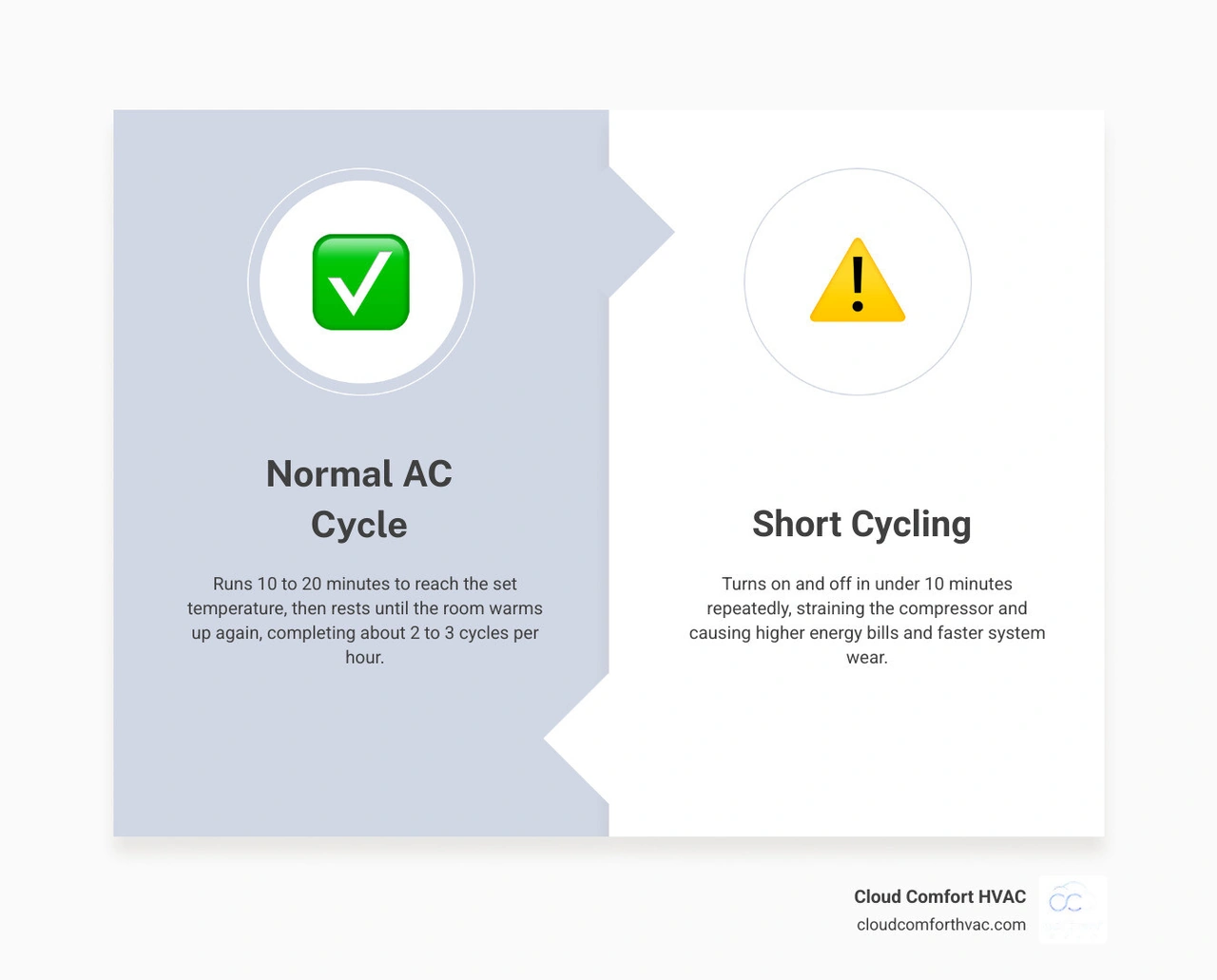
This pattern — where the AC kicks on, runs for just a few minutes, then shuts off and starts again — is called short cycling. Normal AC cycles last 10 to 20 minutes. If yours is cutting off in under 10, something is wrong.
Short cycling puts extra strain on your compressor every single time it restarts. Over time, that leads to higher energy bills, uneven cooling, and a system that wears out years ahead of schedule. In Southern California, where summer heat puts your AC under constant demand, this is a problem you want to fix fast.
The good news? Most causes are diagnosable at home in just a few steps.
What is Short Cycling and Why Does It Happen?
To understand why your air conditioner is acting up, it helps to look at how a healthy cooling system should behave. Under normal conditions, an air conditioner runs for about 10 to 20 minutes to bring your indoor spaces down to the temperature set on your thermostat. Once it reaches that target, it shuts down, rests, and waits until the indoor temperature naturally rises again. Typically, a healthy system completes about 2 to 3 of these cycles per hour.
When an AC is short cycling, this rhythm breaks down completely. The system starts up, runs for a brief window—often just 2 to 7 minutes—and then abruptly shuts off. Before your home can actually get comfortable, the system turns right back on and tries again.
This constant starting and stopping is incredibly hard on your equipment. The startup phase of an air conditioning cycle is the most energy-intensive part of its operation. When your system restarts every few minutes, its energy efficiency drops by 15% to 20%, leading to a sudden spike in your monthly electricity bills.
Even worse, the compressor—the expensive heart of your outdoor unit—experiences immense physical wear and tear. Running short cycles repeatedly can shorten an air conditioner's overall lifespan by 5 to 10 years, turning what should have been a 15-year investment into a premature replacement headache.
If you want to dive deeper into the mechanics of unexpected shutdowns, check out our AC Keeps Turning On and Off: Troubleshooting Guide for an in-depth breakdown of these operational cycles.
AC Keeps Turning On and Off: What Is Wrong?
If your ac keeps turning on and off what is wrong is usually related to either restricted airflow, failing electrical components, or an improperly balanced system. Let's take a closer look at the primary culprits that cause this issue in homes across Torrance, Manhattan Beach, and Rancho Palos Verdes.
Airflow Restrictions: AC Keeps Turning On and Off What Is Wrong
Your air conditioner needs to "breathe" to work properly. It relies on a steady, unobstructed flow of warm indoor air passing over the cold evaporator coils to transfer heat out of your home. When that airflow is restricted, things go wrong quickly.
- The Dirty Air Filter: A clogged, dusty air filter is the single most common cause of short cycling. In fact, dirty filters account for the vast majority of cycling issues that HVAC technicians encounter. When the filter is packed with dust, the blower motor has to work twice as hard to pull air through. This lack of airflow causes the temperature inside your indoor unit to plummet.
- Frozen Evaporator Coils: When airflow drops, the moisture on your evaporator coils can quickly turn to ice. This ice acts as an insulating barrier, preventing any heat exchange and causing the system to freeze up. To protect itself from total failure, the system's safety switches trip, forcing it to shut down. Once the ice thaws slightly, it attempts to restart, starting the cycle all over again. For more on this, read our guide on Why Is AC Freezing Up in the Summer Heat.
- Blocked Vents and Register Grilles: Closing too many interior vents or blocking them with heavy furniture creates excessive static pressure inside your ductwork. This starves the system of air and triggers safety shutdowns. Learn how to spot these issues in our guide on Troubleshooting AC Airflow Problems.
Thermostat and Electrical Faults: AC Keeps Turning On and Off What Is Wrong
Sometimes the issue isn't with the cooling components themselves, but with the electrical signals controlling them.
- Thermostat Placement and Calibration: Your thermostat is the brain of your HVAC system. If it is installed in a poor location—such as in direct sunlight, near a drafty window, or close to heat-producing kitchen appliances—it will get false readings. It might think the room is cool, shut the system down, and then immediately turn it back on as soon as a warm draft hits it. Weak batteries can also cause the thermostat to lose its connection to the AC, leading to intermittent power cuts.
- Failing Run Capacitor: Think of the run capacitor as a high-powered battery that delivers steady electrical energy to keep your compressor and fan motors running. If this capacitor begins to fail or degrade, it won't be able to provide the constant voltage your system needs. The compressor will start up, lose power, shut down, and attempt to restart.
- Tripped Safety Switches: Modern air conditioners feature built-in safety switches designed to prevent catastrophic damage. For example, a high-pressure switch will shut the compressor down if the system overheats or if refrigerant pressures spike. Similarly, a float switch in your drain pan will cut power if water backs up. If you're experiencing electrical issues, our resources on Solving Frequent AC Circuit Breaker Trips can help you trace the root cause.
5 Steps to Diagnose and Troubleshoot Your Short-Cycling AC
Before you call in the professionals, there are several troubleshooting steps you can perform yourself. Many short-cycling issues can be resolved with simple, low-cost maintenance.
| Diagnostic Step | What to Check | DIY Fix | When to Call a Pro |
|---|---|---|---|
| 1. Air Filter | Check for gray dust buildup and light blockage. | Replace with a fresh filter. | If cycling continues after replacement. |
| 2. Thermostat | Check batteries, settings, and location. | Replace batteries; clear heat sources nearby. | If the thermostat screen is blank or unresponsive. |
| 3. Vents & Condenser | Ensure vents are open; check outdoor unit for debris. | Open all vents; clear leaves/dirt from outdoor unit. | If the outdoor fan motor won't turn on. |
| 4. Coils & Drainage | Check for ice on coils or water in the drain pan. | Turn off AC, run fan to thaw; clear drain line. | If there are active refrigerant leaks or persistent clogs. |
| 5. Cycle Timing | Time the run cycles with a stopwatch. | Note down exact run times for your technician. | If cycles consistently remain under 10 minutes. |
Step 1: Check the Air Filter
Start with the easiest and most likely suspect. Slide your air filter out of its slot and hold it up to a light source. If you cannot see light passing through the fibers, it is clogged. Replacing a dirty air filter solves short cycling problems about 60% of the time. We recommend replacing standard filters every 1 to 3 months, especially during the peak summer months in Southern California when systems run almost continuously.
Step 2: Inspect the Thermostat Settings and Location
Make sure your thermostat is set to "Cool" and that the target temperature is set at least a few degrees below the current room temperature. If the display is fading or flickering, pop in a fresh set of high-quality AA batteries. If your thermostat is mounted directly across from a sunny window or near a supply vent, try closing the blinds or redirecting the airflow away from the sensor to see if the cycling behavior stabilizes.
Step 3: Examine Indoor Vents and the Outdoor Condenser
Walk through your home and verify that at least 80% of your supply and return vents are fully open and unobstructed by rugs, drapes, or furniture. Next, head outside to your condenser unit. Ensure there is at least a two-foot clear zone around the unit. Clear away any dead leaves, weeds, or outdoor toys that might be blocking the outdoor coil's airflow.
Step 4: Look for Frozen Coils or Drainage Issues
Take a look at your indoor evaporator unit. Do you see ice forming along the brass refrigerant lines or on the coil cabinet itself? If so, turn your system off immediately at the thermostat and set the fan option to "On." This runs the blower without running the compressor, allowing the ice to melt safely.
While you are there, inspect the condensate drain pan. If the pan is filled with standing water, your condensate drain line is likely clogged, which trips the safety float switch. For guidance on clearing this, see our article on How to Identify and Fix AC Drainage Problems, and learn more about sudden shutdowns in Fix AC That Keeps Shutting Off Unexpectedly.
Step 5: Monitor the Cycle Length
If you have completed steps 1 through 4 and your system is still turning on and off, grab your phone and time the cycles. Note how many minutes the compressor runs before shutting down, and how long it stays off. Having this data ready is incredibly helpful for your HVAC technician, as it helps narrow down whether the issue is a rapid thermal overload or a pressure-switch shutdown.
The Long-Term Effects of Ignoring AC Cycling Issues
It can be tempting to ignore a short-cycling air conditioner, especially if your home is still technically reaching a comfortable temperature. However, letting this issue persist is a recipe for major system damage and financial strain.
- Catastrophic Compressor Failure: The compressor is the most expensive and critical component of your air conditioner. Because it experiences the highest level of electrical and mechanical stress during startup, short cycling accelerates wear on its internal valves and motor windings. Running a short-cycling system can easily cut years off its operational life, leading to a costly premature replacement.
- Skyrocketing Energy Bills: Because your AC draws the most power when it first turns on, a system that starts up 10 times an hour will consume significantly more electricity than a system that runs for two steady, 20-minute cycles. Many homeowners see their monthly utility bills jump by 20% to 30% in a single billing cycle due to unresolved short cycling.
- Poor Humidity Control: An air conditioner doesn't just cool the air; it also removes moisture. However, dehumidification only occurs during the second half of a standard cooling cycle. If your system runs for only 5 minutes at a time, it will lower the air temperature but leave all the humidity behind. This results in a sticky, muggy indoor environment that fosters mold growth.
- Uneven Indoor Temperatures: When an AC turns off too quickly, it fails to distribute cool air evenly throughout your home. You will likely notice hot spots in upstairs rooms or areas furthest from the indoor blower unit.
To protect your home and your wallet, regular maintenance is essential. Learn more about how proactive care keeps your system running smoothly by reading Why Regular AC Maintenance Is Crucial for Energy Efficiency and Longevity.
Frequently Asked Questions About AC Short Cycling
How long should a normal AC cooling cycle last?
Under normal conditions, a healthy air conditioner should run for 10 to 20 minutes per cycle. In moderate weather, you should expect to see about 2 to 3 cycles per hour. During extreme heatwaves, your system may run for longer, continuous periods to keep up with the outdoor heat load—this is completely normal. However, if your system is shutting down in under 10 minutes, it is short cycling.
Can a dirty air filter really cause my AC to turn on and off?
Yes, absolutely. Restricted airflow is the most common cause of short cycling. When a filter is clogged, the lack of warm air passing over the evaporator coils causes them to drop below freezing. This leads to ice buildup, which eventually triggers the system's safety switches to shut the unit down to protect the compressor from liquid slugging. Replacing your filter regularly is the easiest way to prevent this.
Is short cycling a sign that I need a new AC system?
Not necessarily. Many common causes of short cycling—such as a dirty filter, a bad run capacitor, or a clogged drain line—are straightforward, simple repairs. However, if your system is over 10 to 12 years old and the short cycling is caused by a failing compressor or an oversized unit that was improperly installed, upgrading to a modern, energy-efficient system may be the best long-term solution. For a complete guide on navigating these decisions locally, check out our AC Repair Torrance Guide 2026.
Conclusion
When your air conditioner keeps turning on and off, it is a clear warning sign that your system is under severe stress. Whether it is a simple fix like swapping out a dirty air filter or a more complex electrical issue like a failing run capacitor, addressing the problem early is the key to preventing expensive compressor damage and keeping your utility bills under control.
At Cloud Comfort HVAC, we provide expert, eco-friendly cooling solutions tailored to the unique climate needs of Southern California. We proudly serve homeowners across the South Bay and surrounding areas, including:
- Rancho Palos Verdes
- Manhattan Beach
- Culver City
- Torrance
- Palos Verdes Estates
- Carson
If you have gone through our troubleshooting steps and your system is still short cycling, it is time to call in the professionals. Our experienced technicians can perform a comprehensive diagnostic check, inspect your system's electrical controls, and ensure your home stays cool and comfortable all summer long.
To learn more about keeping your system in peak condition, explore our AC Maintenance Program Ultimate Guide or read our HVAC Repair Torrance CA Complete Guide.
Don't let a short-cycling AC wear itself down. Schedule Professional AC Repair with Cloud Comfort HVAC today!
Have an HVAC or plumbing question?
Our Torrance comfort experts are here to help — no pressure, just honest answers.
Ask an Expert