How Often Should You Get AC Service in a Coastal Southern California Home: 2025 Essential Guide
June 11, 2026

Your Quick Answer: How Often Should You Get AC Service in a Coastal Southern California Home
If you're wondering how often should you get AC service in a coastal Southern California home, here's the short answer:
| Your Situation | Recommended Service Frequency |
|---|---|
| Within 2 miles of the coast (Manhattan Beach, Palos Verdes Estates, Rancho Palos Verdes) | Twice a year - spring and fall |
| Coastal home with a heat pump or system older than 10 years | Twice a year - spring and fall |
| Coastal home, newer system, 2-5 miles from shore | Once a year - ideally spring |
| Inland Southern California (Torrance, Carson, Culver City) | Once a year - spring before cooling season |
Living close to the Pacific Ocean is one of the great joys of Southern California — but that same ocean air works quietly against your air conditioning system year-round. Salt particles, coastal humidity, and the persistent marine layer that blankets communities like Manhattan Beach and Palos Verdes Estates from late spring through early summer create conditions that are genuinely tough on AC equipment. Without the right maintenance schedule, a system that should last 15 to 20 years can wear out in 10 to 12 — sometimes less if it's sitting unprotected close to the shoreline.
The good news is that knowing your local environment is half the battle. A smart, coast-aware service schedule keeps your system running efficiently, prevents expensive breakdowns, and protects the investment you've made in your home's comfort.
How Often Should You Get AC Service in a Coastal Southern California Home?
When determining how often should you get ac service in a coastal southern california home, we must look beyond generic national guidelines. Many online resources suggest a simple "once-a-year" tune-up. While that advice works well for inland areas like Torrance, Carson, or Culver City, coastal properties face a completely different set of environmental stressors.
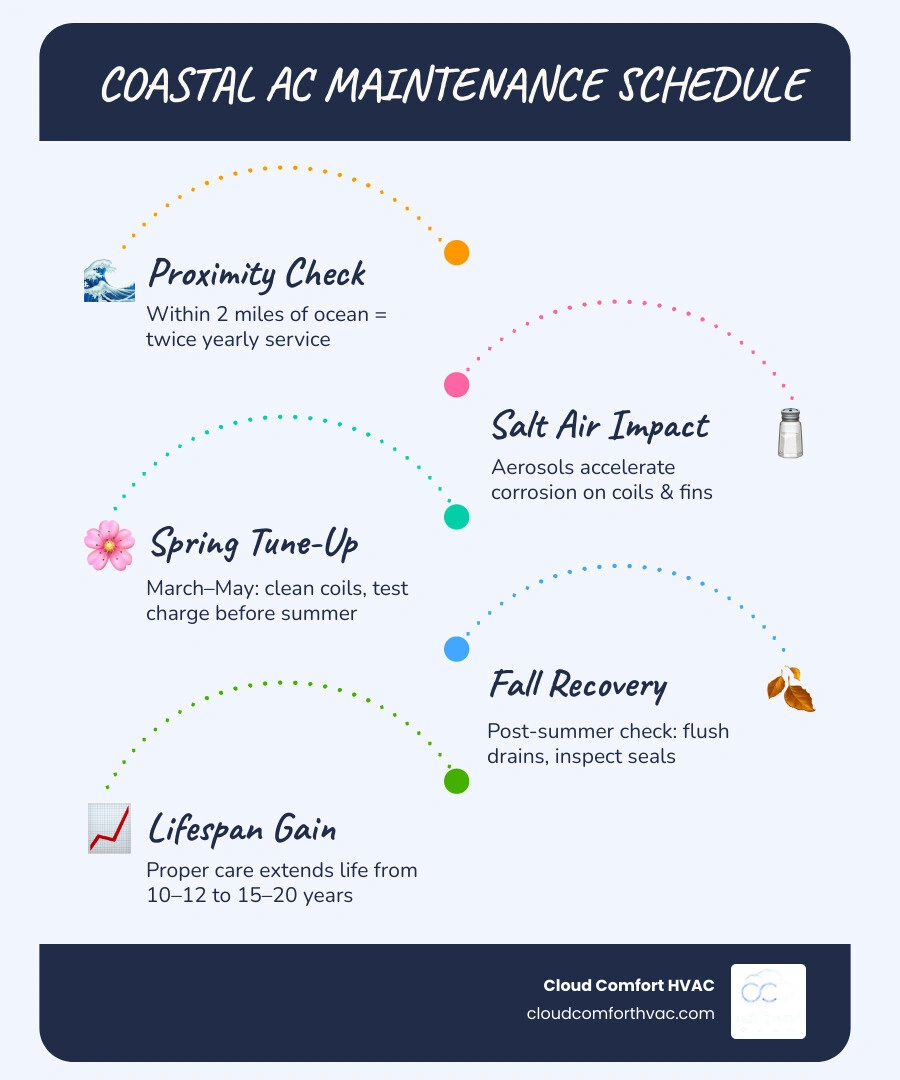
For homes located directly on or near the coast in Manhattan Beach, Hermosa Beach, Redondo Beach, and the Palos Verdes Peninsula, we highly recommend professional AC service twice a year (biannually).
Southern California is famous for its microclimates. You can experience a cool, damp 65°F marine layer in Palos Verdes Estates while it is a hot, dry 85°F just a few miles inland in Torrance. Because of these rapid shifts, your outdoor condenser unit is subjected to a constant cycle of damp, salty fog followed by warm sunshine. This process accelerates wear and tear on metal components, making AC Maintenance in Coastal Areas an absolute necessity rather than an optional chore.
Why Proximity to the Ocean Dictates How Often Should You Get AC Service in a Coastal Southern California Home
The primary culprit behind premature air conditioner failure along the South Bay coastline is salt spray. Salt aerosols are carried by ocean breezes and can travel up to two miles inland, though the concentration is highest within the first half-mile of the shoreline.
When these tiny salt particles land on your air conditioner's outdoor condenser unit, they don't just sit there. Salt is hygroscopic, meaning it actively draws moisture out of the air. In our coastal environment, where humidity averages 60% to 75% (compared to just 30% to 45% inland), this creates a constant chemical reaction on the metal surfaces of your unit.
This leads to:
- Accelerated Corrosion: Salt aerosols cause corrosion to run 3 to 5 times faster within two miles of the coast compared to inland properties.
- Reduced Heat Transfer: As the aluminum fins on your condenser corrode, they begin to crumble and disintegrate. This reduces the surface area available to release heat, forcing your system to run longer and work much harder to cool your home.
- Refrigerant Leaks: Over time, the copper coils inside your system experience pitting corrosion, which eventually leads to tiny pinhole leaks.
Because of these aggressive coastal conditions, scheduling professional AC Service every six months ensures that salt buildup is washed away and early signs of corrosion are treated before they destroy your system.
Biannual vs. Annual: How Often Should You Get AC Service in a Coastal Southern California Home?
While a single annual visit is the baseline standard for most homes, coastal Southern California properties benefit immensely from a biannual schedule. Here is why we recommend a two-visit approach for beachside homes:
The Spring Tune-Up (Pre-Summer Prep)
Scheduled between March and May, this visit prepares your system for the upcoming summer heat. A technician will perform electrical diagnostics, test the compressor capacitor (the number one failure point during heatwaves), check refrigerant levels, and deep clean the coils. This ensures maximum efficiency before the warm weather hits.
The Fall Recovery Check (Post-Summer Cleanup)
After a summer of battling warm temperatures and heavy marine layers, a fall visit focuses on recovery. The technician will thoroughly rinse away the salt crust that has accumulated on your outdoor condenser coils over the summer, clear out the condensate drain lines, and inspect the heating components of your system (such as your furnace or heat pump) before the cooler winter months arrive.
If your home utilizes a modern heat pump system — which handles both heating and cooling duties year-round — biannual service is even more critical. Because heat pumps accumulate twice the operating hours of a separate AC and furnace setup, they require consistent, professional AC Tune Up support to preserve their manufacturer warranties and maintain peak efficiency.
Unique Environmental Factors Affecting Coastal SoCal HVAC Systems
To truly understand why coastal systems require extra attention, we have to look at the unique environmental factors at play along the Southern California coast.
Salt Air Corrosion and the "Beach Life" Effect
When salt air settles on your outdoor condenser, it triggers galvanic corrosion. This happens because air conditioners are made of dissimilar metals — typically copper tubing held in place by aluminum fins. When salt water acts as an electrolyte between these two metals, it causes the aluminum to sacrifice itself and corrode rapidly.
Without proactive corrosion management, the lifespan of a standard central air conditioner in a coastal environment can shrink from the typical 15 to 20 years down to just 10 to 12 years. In extreme beachfront cases, unprotected systems have failed in as little as 5 to 7 years. Recognizing Why Regular AC Maintenance is Crucial helps prevent this rapid degradation, protecting your investment and ensuring your system operates at peak efficiency.
High Humidity and Condensate Drain Clogs
Coastal Southern California homes experience much higher average humidity levels than their inland neighbors. Because your air conditioner acts as a dehumidifier while it cools, coastal AC units extract a massive volume of water from the indoor air.
This high volume of moisture flows continuously through your condensate drain line. Because the coastal air is rich in moisture and organic particles, it creates the perfect breeding ground for algae, mold, and bacterial biofilm inside your drain pan and line. Coastal drain lines clog 2 to 3 times more often than inland drains. When a clog occurs, it can cause water to back up and overflow, leading to hidden mold growth and expensive water damage inside your ceilings or walls.
Coastal vs. Inland Southern California AC Maintenance Needs
The way you maintain your HVAC system should directly reflect where you live. Southern California's geography means that maintenance priorities shift dramatically over just a few miles.
| Maintenance Factor | Coastal Zone (Manhattan Beach, Palos Verdes) | Inland Zone (Torrance, Carson, Culver City) |
|---|---|---|
| Primary Threat | Salt-air corrosion & high humidity | High run-time wear & dust accumulation |
| Average Humidity | 60% – 75% | 30% – 45% |
| Condenser Coil Cleanings | Needs frequent gentle water rinses to remove salt | Needs annual deep cleans to remove dirt & pollen |
| Drain Line Clog Risk | High (due to heavy moisture extraction & biofilm) | Moderate |
| Filter Lifespan | 60 to 90 days (impacted by marine fog & pollen) | 30 to 60 days (impacted by inland dust & Santa Ana winds) |
| Expected System Lifespan | 10 to 15 years (without maintenance) | 15 to 20 years |
Whether you are enjoying the cool ocean breeze in Palos Verdes Estates or experiencing the warmer summer days of Torrance, tailoring your HVAC Maintenance plan to your specific microclimate is the most effective way to ensure reliable, long-term performance.
What a Professional Coastal AC Tune-Up Includes
A professional coastal AC tune-up is a highly technical process designed to protect your system from the elements while optimizing its performance. When our certified technicians perform a seasonal tune-up, they focus on several critical areas:
- Electrical Component Testing: We measure the microfarads of your starting capacitors and inspect contactor points. Thermal shock from rapid coastal temperature swings can loosen electrical connections over time.
- Refrigerant Charge Verification: We measure refrigerant levels using superheat and subcooling methods rather than simple pressure readings. A system that is even 5% undercharged can lose up to 10% to 15% of its operating efficiency.
- Condensate Drain Line Flush: We clear out the drain pan and flush the line to eliminate algae and biofilm, preventing sudden backups.
- Static Pressure Testing: We measure the airflow resistance across your system. Airflow problems from dirty blower components or restricted ductwork can slash operating efficiency by up to 15%.
- Coil Inspection and Cleaning: We gently clean the evaporator and condenser coils. Removing even a thin layer of salt and dirt allows the system to transfer heat much more efficiently, lowering your monthly energy bills.
To keep your system running smoothly year-round, following a structured Seasonal HVAC Maintenance Checklist ensures no critical components are overlooked during these visits.
Professional Tasks vs. Homeowner DIY Maintenance
While professional maintenance is essential for keeping your warranty valid and handling complex electrical and refrigerant components, there are several simple tasks homeowners can perform to support their systems:
- Change Your Air Filters: This is the single most important DIY task. A clean filter can lower your system's energy consumption by 5% to 15%. In coastal areas, check your filters monthly and replace them every 60 to 90 days (or every 30 days if you have pets or allergies).
- Maintain Clearance Around Your Condenser: Ensure plants, shrubs, and outdoor furniture are kept at least two feet away from your outdoor unit to allow for unrestricted airflow.
- Perform a Gentle Fresh-Water Rinse: If you live within two miles of the beach, gently rinse your outdoor condenser coils with a garden hose once a month. Use low pressure (never a power washer, which can bend the delicate aluminum fins) to wash away accumulated salt crust.
- Avoid Plastic Covers: Never wrap your outdoor unit in a non-breathable plastic cover. This traps coastal moisture inside, accelerating rust and corrosion on the electrical panels and coils.
For the more technical aspects of your system — such as checking refrigerant levels, testing high-voltage connections, or diagnosing compressor issues — relying on professional care is the safest option. There are 9 Reasons for Professional AC Maintenance that protect your equipment, keep your family safe, and ensure your system remains compliant with manufacturer warranty guidelines.
Signs Your Coastal AC System Needs Immediate Service
Between your scheduled maintenance visits, keep an eye (and ear) out for these warning signs that your air conditioner needs professional attention:
- Weak Airflow: If the air coming from your vents feels weak or barely cool, it could indicate a clogged filter, a failing blower motor, or a frozen evaporator coil.
- Unusual Noises: Squealing, grinding, or rattling sounds from your outdoor unit often point to failing motor bearings or a loose component.
- Musty Odors: A damp, musty smell when your AC turns on is a classic sign of mold or biofilm growth inside your condensate drain pan or ductwork.
- Short-Cycling: If your AC turns on and off rapidly without completing a full cooling cycle, it may be overheating or experiencing a sensor failure.
- Unexplained Spikes in Utility Bills: If your energy bills are climbing but your cooling habits haven't changed, your system is likely working much harder than it should due to dirty coils or failing components.
Addressing these minor issues early prevents them from cascading into major compressor failures. Investing in timely HVAC Preventative Maintenance is the most effective way to avoid sudden, inconvenient breakdowns when the summer heat peaks.
Frequently Asked Questions About Coastal SoCal AC Service
When is the best time of year to schedule AC service in coastal Southern California?
The ideal time to schedule your primary AC service is during our "Golden Window" between March and early May. Scheduling during spring ensures your system is fully prepared before the summer heat arrives, and it allows you to beat the busy summer rush when HVAC technicians are at peak capacity. If you are on a biannual schedule, your second visit should be scheduled in mid-to-late autumn.
Can salty ocean air damage my indoor AC components?
Yes. While your outdoor condenser unit takes the brunt of the ocean weather, the damp marine layer carries fine salt particles and high humidity indoors through open windows and doors. This moisture can settle on your indoor evaporator coil and electrical control boards, leading to corrosion and reduced indoor air quality. Using high-quality, properly rated MERV filters (typically MERV 8 to 11 for most residential systems) helps trap these fine particles before they reach your indoor equipment.
How long does an AC unit last in coastal California compared to inland?
In milder inland areas like Torrance or Carson, a well-maintained central air conditioner can easily last 15 to 20 years. However, along the immediate coast in Manhattan Beach or Palos Verdes, that lifespan typically drops to 10 to 15 years due to the corrosive effects of salt air and high humidity. If a system is neglected and receives no regular maintenance, its coastal lifespan can easily be cut in half, failing in as little as 7 to 8 years. Consistent, proactive maintenance is the key to closing this gap.
Conclusion
Living along the beautiful Southern California coast shouldn't mean sacrificing the lifespan or efficiency of your home's comfort system. While our unique marine environment presents real challenges for air conditioning equipment, a consistent, coast-aware maintenance schedule is all it takes to keep the salt and humidity at bay.
By scheduling your professional AC tune-ups on time, you protect your system from corrosion, keep your monthly utility bills low, and ensure your home remains a cool, comfortable oasis year-round.
At Cloud Comfort HVAC, we specialize in providing expert, eco-friendly cooling solutions tailored specifically to the unique microclimates of our coastal and inland communities. Whether you need a comprehensive spring tune-up, a protective coil treatment, or want to join our convenient AC Maintenance Program for year-round peace of mind, our team is here to help.
Keep your home comfortable and your system protected from the beach elements. Schedule your coastal AC service with Cloud Comfort HVAC today and experience the difference of expert, local care.
Have an HVAC or plumbing question?
Our Torrance comfort experts are here to help — no pressure, just honest answers.
Ask an Expert