Average Lifespan of a Central Air Conditioner Near the Southern California Coast: 2025 Expert Guide
July 18, 2026

How Long Does a Central Air Conditioner Last Near the Southern California Coast?
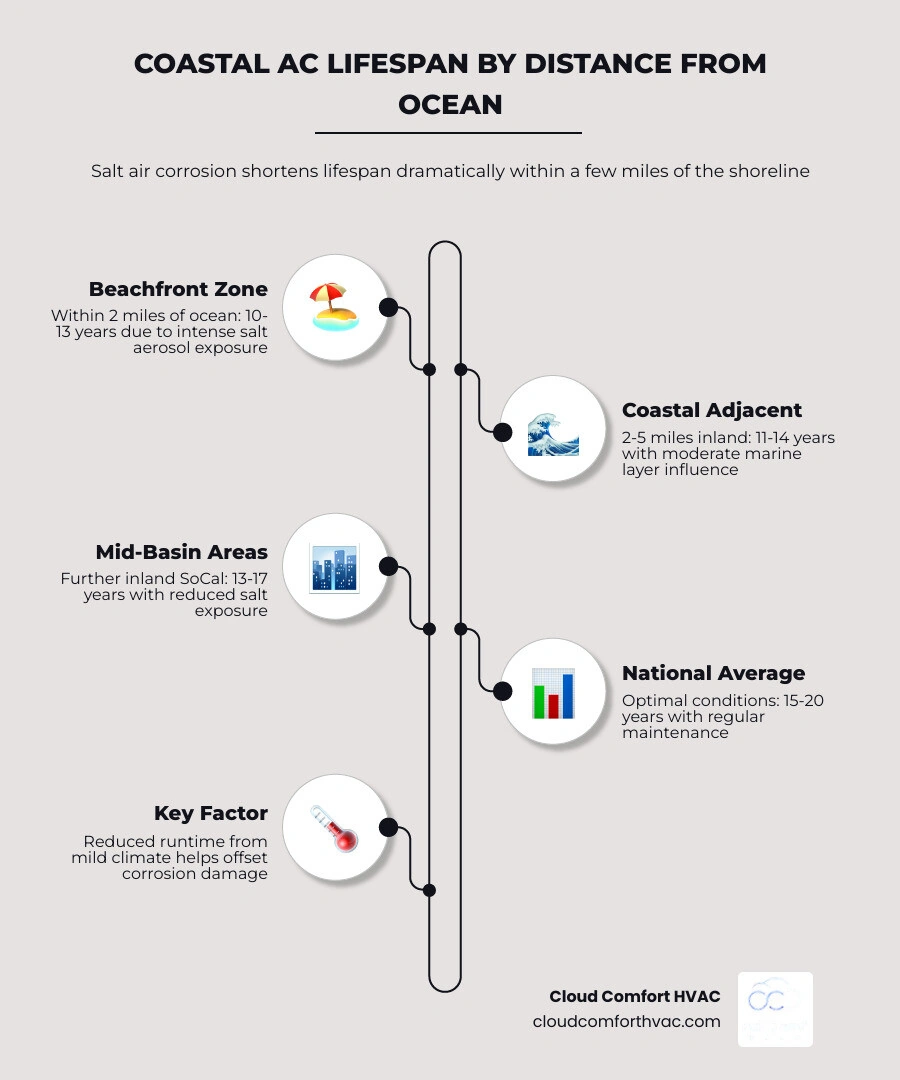
The average lifespan of a central air conditioner near the Southern California coast is significantly shorter than the national average — and if you own a home in Torrance, Manhattan Beach, Rancho Palos Verdes, or anywhere along the South Bay shoreline, that gap matters.
Here is a quick answer by location:
| Location | Average AC Lifespan |
|---|---|
| Within 2 miles of the ocean (beachfront/coastal) | 10-13 years |
| Coastal-adjacent (2-5 miles from ocean) | 11-14 years |
| Mid-basin / further inland SoCal | 13-17 years |
| National average (well-maintained) | 15-20 years |
The culprit is salt air. The marine layer that rolls in off the Pacific every night carries microscopic salt aerosols that land on your outdoor condenser unit and begin corroding aluminum fins and copper refrigerant lines — day after day, year after year. Unlike the heat stress that wears down AC systems in the desert, coastal corrosion is slow, invisible, and relentless.
The good news: the South Bay's mild temperatures mean your system runs far fewer hours than a unit in Palm Springs or the Inland Empire. That reduced runtime partially offsets the corrosion damage. But without the right maintenance and installation choices, most coastal homeowners still find themselves replacing their AC years ahead of what the manufacturer's brochure suggests.
This guide breaks down exactly what shortens coastal AC life, what you can do to get more years out of your system, and when it finally makes more sense to replace rather than repair.
What is the Average Lifespan of a Central Air Conditioner Near the Southern California Coast?
When HVAC manufacturers design central air conditioning systems, they build them to last between 15 and 20 years under optimal, moderate conditions. However, "optimal" rarely describes the chemical reality of living within a few miles of the Pacific Ocean.
In coastal Southern California—specifically in beachside communities like Manhattan Beach, Hermosa Beach, and the Palos Verdes Peninsula—the realistic lifespan for a standard central air conditioner drops to 10 to 14 years.
To understand why, we have to look at how local geography and weather patterns dictate the wear and tear on your mechanical systems. The unique marine climate of the South Bay creates a double-edged sword for heating and cooling equipment.
On one hand, our summers are incredibly mild compared to the scorching triple-digit heat of the San Fernando Valley or the Inland Empire. Because our cooling season is shorter and less intense, your compressor experiences fewer operational run-time hours. To learn more about how our local microclimate shapes your home comfort decisions, read about How Weather in Torrance CA Affects Your HVAC System.
On the other hand, our famous "June Gloom" and daily marine layer bring high relative humidity and salt-laden fog directly into contact with your outdoor condenser. When this moisture-heavy salt air settles on the unit, it triggers a chemical reaction known as galvanic corrosion. Over time, this corrosion dissolves the thin aluminum heat-dissipation fins, causing them to flake away like ash. Once the fins degrade, the system loses its ability to shed heat, forcing the compressor to work harder, run longer, and ultimately fail years ahead of schedule.
| Region / Microclimate | Expected Lifespan (Years) | Primary Environmental Stressor |
|---|---|---|
| Immediate Coast (0–2 miles) | 10 – 13 | Heavy salt-air corrosion, high humidity |
| Coastal-Adjacent (2–5 miles) | 11 – 14 | Moderate salt-air exposure, marine layer fog |
| Mid-Basin (e.g., Carson, Culver City) | 12 – 16 | Mild marine influence, moderate runtime |
| Inland Valleys (e.g., San Fernando Valley) | 12 – 16 | Extreme summer heat, heavy runtime |
| Desert Areas (e.g., Coachella Valley) | 10 – 14 | Severe heat waves, dust, extreme runtime |
Key Factors That Shorten or Extend Coastal AC Longevity
While the climate sets the baseline for your air conditioner's life expectancy, several specific environmental, chemical, and physical factors dictate whether your system will fail closer to the 10-year mark or push past 14 years.

The primary physical threat is the breakdown of the condenser coil. Your outdoor unit uses a coil made of copper tubing woven through thousands of ultra-thin aluminum fins. When salt aerosols accumulate in the tiny gaps between these two differing metals, galvanic corrosion is accelerated. The aluminum acts as a sacrificial anode, corroding rapidly. As these fins deteriorate, the heat transfer area of your condenser can easily shrink by 30% to 40%, leaving you with a system that runs constantly but fails to cool your home.
Fortunately, modern HVAC technology offers ways to fight back. Homeowners can extend their system's lifespan by choosing units with specialized protective coatings. Factory-applied coatings, such as epoxy or marine-grade E-coatings (often referred to as "double-phase" or "triple-phase" coil protection), shield the raw metal from chemical exposure.
Additionally, structural wind barriers can play a massive role in protecting your outdoor unit. Positioning your condenser behind a decorative wall, home extension, or robust fencing can block direct, salt-heavy ocean winds. Just be sure to maintain at least two feet of clearance around the unit to ensure proper airflow, as suffocating the system with a tight enclosure will cause it to overheat and fail prematurely.
Proximity to the Shoreline and the Average Lifespan of a Central Air Conditioner Near the Southern California Coast
The closer your home sits to the breaking waves, the more aggressive you must be with your maintenance and system protection strategies.
In the high-corrosion zone—defined as any property within two miles of the shoreline—salt aerosol concentrations are at their peak. For beachfront homes in communities like Manhattan Beach and Hermosa Beach, standard, unprotected air conditioners can show severe structural rust and coil decay in as little as 5 to 7 years if neglected.
If you are planning an upgrade in these immediate coastal areas, it is vital to select systems specifically engineered to withstand coastal environments. Investing in high-efficiency, marine-treated units pays off by preventing early system failure. You can explore robust, sea-air-resistant options by reading about our specialized installations for an Energy Efficient Air Conditioner Manhattan Beach CA and finding the right system design for an Energy Efficient Air Conditioner Hermosa Beach CA.
How Proper Sizing Impacts the Average Lifespan of a Central Air Conditioner Near the Southern California Coast
One of the most common, yet overlooked, factors that dooms a coastal air conditioner to an early grave is improper system sizing during the initial installation.
Many contractors rely on outdated rule-of-thumb estimates based solely on square footage. However, calculating the cooling load for a coastal home requires a highly precise, professional calculation known as a Manual J load calculation. This calculation factors in local microclimates, window types, home insulation, sun exposure, and the cooling influence of the marine breeze.
If an air conditioner is oversized for your home, it will fall victim to "short-cycling." This means the system turns on, cools the air rapidly without removing humidity, and shuts off after only a few minutes. Because the start-up cycle puts the most electrical and mechanical strain on the compressor and run capacitor, short-cycling causes components to wear out rapidly.
Conversely, an undersized unit will run non-stop on warmer days, overworking the compressor and burning through energy. For homeowners on the Palos Verdes Peninsula, getting the sizing exactly right is essential to preserving your equipment. Learn more about proper system selection by reading about our solutions for an Energy Efficient Air Conditioner Rancho Palos Verdes CA and ensuring your home is correctly matched with an Energy Efficient Air Conditioner Palos Verdes Estates CA.
Maximizing Longevity Through Regular Maintenance
If coastal salt air is a constant chemical attack on your air conditioner, then a consistent, proactive maintenance routine is your system's only defense. Neglecting your HVAC system in a beach community is a recipe for premature replacement, while proper care can easily add 3 to 5 years of reliable service life to your unit.
To keep your system running optimally, we recommend a combination of simple homeowner habits and professional service:
- Frequent Fresh-Water Rinses: At least once a month (and after any major windstorm), use a standard garden hose to gently rinse the outdoor condenser coils. This simple step washes away accumulated salt crystals before they can bond to the metal and start corroding. Crucial warning: Never use a high-pressure power washer, as the intense pressure will instantly bend and flatten the delicate aluminum fins, permanently restricting airflow.
- Keep the Condenser Clear: Ensure that blowing sand, leaves, and coastal garden debris are kept at least two feet away from the outdoor unit.
- Proactive Component Replacement: The electrical run capacitor is the most common failure point in Southern California AC systems. When a capacitor begins to lose its charge, it forces the compressor to draw more electrical current, causing it to run hot and eventually burn out. Replacing your capacitor proactively every 5 to 7 years is a highly cost-effective way to protect your incredibly expensive compressor.
- Schedule Bi-Annual Professional Tune-Ups: While inland homeowners can often get away with annual service, coastal systems benefit greatly from twice-yearly visits. A professional technician can apply specialized anti-corrosive coil flushes, check refrigerant levels, and catch minor electrical degradation before it cascades into a system-wide failure.
For a complete breakdown of what goes into keeping your system in peak condition, check out our AC Maintenance Torrance Complete Guide. If you want to understand the long-term benefits of professional care, read about the 9 Reasons to Get Professional Air Conditioner Maintenance in California. To make keeping up with your system completely effortless, explore the benefits of joining our AC Maintenance Program Ultimate Guide.
When to Repair vs. Replace an Aging Coastal AC Unit
Every homeowner eventually faces the classic dilemma: do you patch up your aging air conditioner one more time, or is it time to invest in a complete system replacement? In coastal environments, this decision is heavily influenced by the physical condition of the outdoor unit and changing efficiency standards.
To make an informed, cost-effective decision, we advise using a few reliable guidelines:
- The 50% Rule: If your system is over 10 years old and a single repair bill approaches or exceeds 50% of the cost of a brand-new system, replacement is almost always the smarter financial move.
- The Age x Repair Rule: Multiply the age of your air conditioner by the estimated repair cost. If the resulting number is greater than 5,000, it is time to replace. For example, a $600 repair on an 11-year-old coastal unit equals 6,600—indicating that replacement is the more sensible option.
- The Refrigerant Factor: If your system was installed before 2010, it likely runs on R-22 Freon. Because the EPA phased out R-22 production, sourcing this refrigerant for a leak repair is incredibly difficult and expensive. Repairing an R-22 system is usually a temporary, costly band-aid.
- Coil Degradation: Take a close look at your outdoor condenser. If the aluminum fins are flaking off, crumbling when touched, or showing widespread green copper corrosion, the coil is structurally compromised. Replacing a coil can cost a significant portion of a full system replacement, and putting a new coil on an old compressor rarely extends the system's life significantly.
Furthermore, modern systems built under current California Title 24 and SEER2 standards are up to 50% more efficient than older, decaying models. Upgrading to a modern, energy-efficient system can cut your summer utility bills by 30% to 40% while giving you the peace of mind of a fresh manufacturer's warranty.
To dive deeper into making this decision for your specific home, read our guide on Should I Repair or Replace My Air Conditioner in the South Bay or Orange County. You can also find additional expert tips on navigating this transition by checking out When to Replace vs Repair Aging AC Unit.
Frequently Asked Questions About Coastal AC Lifespans
How does salt air affect the indoor portion of my HVAC?
While your outdoor condenser bears the brunt of the coastal weather, salt air absolutely affects the indoor portion of your system as well. The damp marine layer humidity easily makes its way indoors, bringing microscopic salt particles with it.
These corrosive particles can settle on your indoor evaporator coil (typically located in your closet or attic furnace) and your electrical control board. Over time, this can lead to pinhole refrigerant leaks in the evaporator coil and electrical failures.
To protect your indoor equipment, we highly recommend using high-MERV air filtration (such as MERV 11 or MERV 13 filters) and replacing them every 30 to 60 days. This keeps salt dust and moisture from settling on your sensitive indoor coils.
Do heat pumps or mini-splits last longer than central AC near the coast?
The lifespan of alternative systems depends heavily on their design and usage patterns:
- Heat Pumps: Because a heat pump provides both heating and cooling, it runs year-round. This continuous operation can slightly shorten its mechanical lifespan compared to a standalone central AC that sits idle during our mild winters. However, in our temperate South Bay climate, the heating load is so low that a well-maintained heat pump can still easily achieve 11 to 14 years of service.
- Ductless Mini-Splits: Mini-split systems are highly popular in coastal homes because they do not require bulky ductwork. High-quality mini-splits often feature superior, factory-applied anti-corrosive coatings on their outdoor units. Additionally, their inverter-driven compressors run at variable speeds rather than constantly cycling on and off. With regular maintenance and coil rinses, a quality mini-split system can easily last 15 to 18 years near the coast.
What are the warning signs that my coastal AC is failing?
If your system is nearing the end of its functional life, it will usually let you know before it shuts down completely. Keep an eye out for these common coastal warning signs:
- Reduced Airflow: If the air coming out of your registers feels weak, your blower motor may be struggling, or your coils may be blocked by dirt and corrosion.
- Lukewarm Air: If the system runs constantly but fails to lower the indoor temperature during a warm South Bay afternoon, your condenser coils have likely lost their heat-transfer capability.
- Frequent Cycling: Turning on and off every few minutes indicates electrical issues, a failing compressor, or incorrect system sizing.
- Visible Rust and Coil Flaking: If you look through the grates of your outdoor unit and see crumbling aluminum fins, green copper corrosion, or heavy rust on the cabinet, your system is structurally nearing its end.
Conclusion
Living near the Southern California coast offers an incredible lifestyle, but it demands extra attention when it comes to maintaining your home's mechanical systems. The average lifespan of a central air conditioner near the Southern California coast may be shorter due to the relentless effects of salt-air corrosion, but with the right installation practices, proper system sizing, and consistent professional maintenance, you can protect your investment and enjoy years of reliable comfort.
At Cloud Comfort HVAC, we specialize in providing eco-friendly, energy-efficient heating and cooling solutions tailored specifically to the unique microclimates of the South Bay. Whether you are in Torrance, Manhattan Beach, Rancho Palos Verdes, or Palos Verdes Estates, our team is dedicated to keeping your home perfectly comfortable.
Ready to ensure your air conditioner is prepared to withstand the beach life? Schedule professional AC maintenance in Torrance with us today, and let our expert team give your system the protection it deserves.
Have an HVAC or plumbing question?
Our Torrance comfort experts are here to help — no pressure, just honest answers.
Ask an Expert