Why Is My Ductless AC Leaking Water Inside in the South Bay Area? Top 5 Fixes
June 19, 2026

Why Is My Ductless AC Leaking Water Inside in the South Bay Area?
If you're asking why is my ductless AC leaking water inside in the South Bay area, here's the short answer:
The most common causes are:
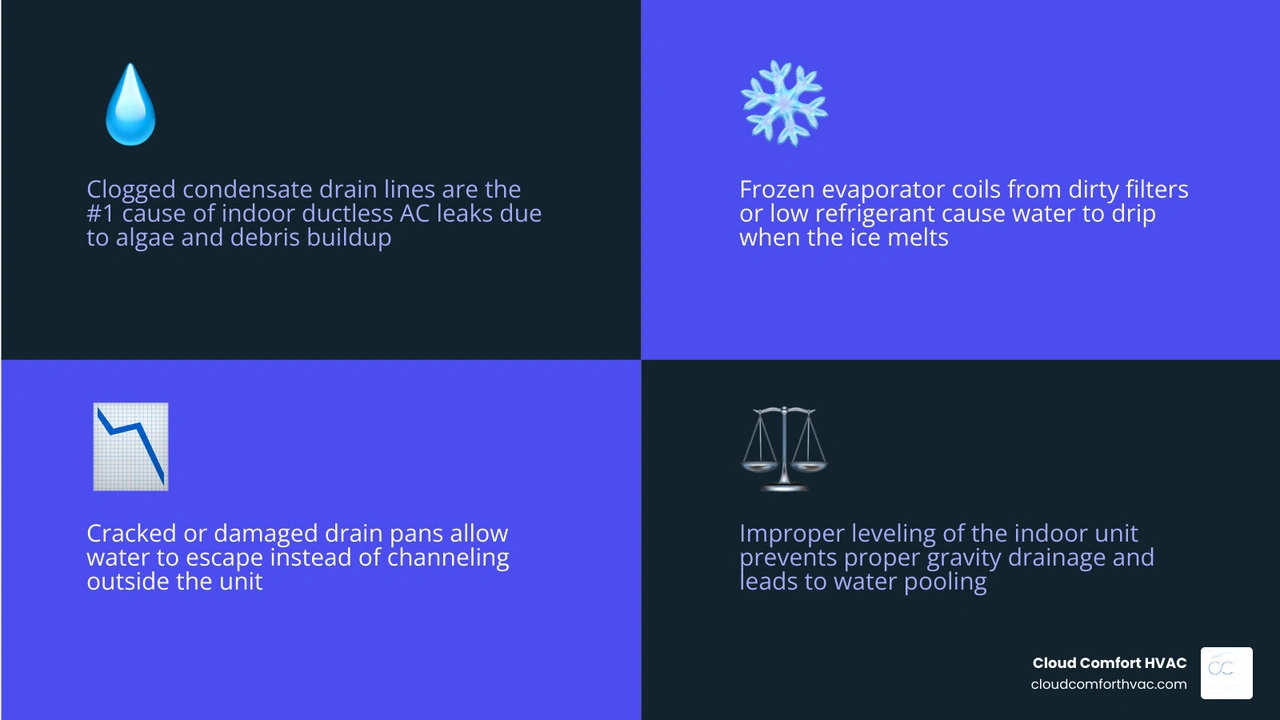
- Clogged condensate drain line - Algae, dust, and debris block the drain, causing water to back up and spill indoors
- Dirty or clogged air filters - Restricted airflow causes the evaporator coil to freeze, then drip as it melts
- Low refrigerant levels - Causes the coil to freeze and leak water when ice thaws
- Cracked or damaged drain pan - Water escapes the collection pan instead of draining outside
- Improper installation - An unlevel unit prevents gravity drainage and causes pooling
Finding water around your indoor mini-split unit is one of those problems that feels minor at first — until it isn't. A small drip can quietly soak into your drywall, encourage mold growth, and reduce your system's cooling performance before you even notice the damage.
South Bay homeowners in cities like Torrance, Manhattan Beach, and Rancho Palos Verdes face an added challenge: the coastal climate brings elevated humidity levels that push ductless systems to produce more condensation than in drier inland areas. When that extra moisture doesn't drain properly, it ends up somewhere it shouldn't — inside your home.
This guide walks you through exactly how to diagnose the source of the leak, what to check yourself, and when it's time to call a professional.
Why Is My Ductless AC Leaking Water Inside in the South Bay Area?
Living along the beautiful Southern California coast comes with a lot of perks, but low humidity isn't always one of them. In the South Bay area—from the beachside neighborhoods of Redondo Beach and Hermosa Beach up to the breezy hills of Rancho Palos Verdes—the marine layer brings cool, moisture-laden air right to our doorsteps.
When your ductless air conditioner runs, its primary job is to extract heat from your indoor air. However, a major secondary function of any air conditioning system is dehumidification. As warm, humid air passes over the freezing cold evaporator coils of your indoor unit, the moisture in the air condenses into liquid water—much like droplets forming on a cold glass of iced tea on a warm day.
Under normal operating conditions, this water collects in a built-in drain pan and flows safely outside through a small condensate drain line. However, the coastal humidity in the South Bay means your mini-split produces a substantial volume of water daily. If there is even a minor restriction in your drainage system, or if your system's airflow is compromised, that high condensation load will quickly back up.
When you find yourself asking why is my ductless AC leaking water inside in the South Bay area, it is almost always because this high volume of condensation has been redirected due to a mechanical issue, a blockage, or an installation error. To protect your home's walls and flooring, getting a professional diagnostic and timely Ductless Mini Split Installation and Repair in California is essential to resolving the issue before mold or structural water damage takes hold.
Common Causes of Indoor Mini-Split Water Leaks
While ductless mini-split systems are incredibly reliable and can be up to 30% more efficient than traditional central AC systems due to the complete absence of ductwork energy losses, they still require regular upkeep. When water starts dripping from the bottom of your sleek indoor air handler, it is usually a warning sign of one of several common issues.
Understanding these primary culprits is the first step toward getting your home comfort back on track. If you are planning a new setup or need to correct a failing system, choosing a premium Ductless AC Installation Torrance CA ensures that your system is configured correctly from day one to handle the specific climate demands of the South Bay.
Below, we break down the most common reasons your ductless unit might be leaking water indoors.
Clogged Condensate Drain Lines: Why Is My Ductless AC Leaking Water Inside in the South Bay Area?
A clogged condensate drain line is by far the most frequent reason for indoor water leaks in mini-split systems.
Because the indoor unit continuously extracts water from our humid coastal air, the drain pan and line remain constantly damp while the system is running. Dust, pet dander, and organic spores that slip past the air filters mix with this water. Over time, this dark, damp environment becomes the perfect breeding ground for:
- Algae and mold growth
- Fungal slime
- Dust clumps and lint accumulation
Since most residential mini-splits rely on simple gravity to move water down and out of the home, even a small clump of algae or a buildup of household dust can completely block the narrow drain tube. When the path to the outdoors is blocked, the water has nowhere to go. Within a few hours of operation, the tiny indoor drain pan overflows, and water begins trickling down your drywall or dripping directly onto your floor.
For homeowners running a Mini Ductless AC Carson CA, keeping this drain line clear of coastal dust and biological growth is one of the most critical steps in maintaining a dry, comfortable indoor space.
Frozen Evaporator Coils: Why Is My Ductless AC Leaking Water Inside in the South Bay Area?
Another common culprit behind indoor water leaks is a frozen evaporator coil. Under normal circumstances, the refrigerant flowing through your indoor unit's coils absorbs heat from your home's air, keeping the coil cold but not frozen. However, if the system's balance is disrupted, the coil's temperature can drop below freezing, causing the condensation on the coil to turn to solid ice.
There are two primary reasons why a mini-split coil will freeze:
- Restricted Airflow: If air cannot flow freely across the evaporator coil, the refrigerant inside cannot absorb enough heat. The coil quickly drops below freezing, and the moisture on it turns to ice.
- Low Refrigerant Levels: A refrigerant leak reduces the pressure in the system, which paradoxically causes the remaining refrigerant to run much colder than designed, freezing any condensation on contact.
When you turn the system off, or when it cycles down, all that accumulated ice begins to melt rapidly. This sudden rush of water easily overflows the shallow indoor drain pan, leading to an active indoor puddle. If you suspect your system is low on refrigerant, scheduling a professional inspection for Ductless AC Installation Manhattan Beach CA can help identify leaks, seal them, and restore your system to safe operating pressures.
Dirty Air Filters and Damaged Drain Pans
Never underestimate the impact of a dirty air filter. When air filters are neglected and become coated in a thick layer of dust, they severely restrict the airflow entering your mini-split. As described above, this lack of warm air moving over the coils leads directly to frozen evaporator coils, which eventually melt and leak water inside.
Additionally, physical damage to the drain pan itself can cause persistent leaks. The drain pan sits directly beneath the evaporator coils inside your wall-mounted unit to catch condensation. Over years of operation, these plastic pans can experience:
- Plastic Degradation: Constant exposure to temperature fluctuations can make older plastic pans brittle, leading to hairline cracks.
- Improper Maintenance Damage: If a well-meaning homeowner or an untrained technician uses too much force or improper tools while cleaning the unit, they can easily crack the fragile plastic pan.
- Debris Blockages inside the Pan: Large pieces of debris can block the tiny outlet hole where the pan connects to the drain line, causing water to overflow the edges of the pan rather than entering the tube.
If you are experiencing water pooling behind or underneath your unit in the Westside or South Bay, securing a professional checkup or a new Ductless AC Installation Culver City CA will ensure your drain pan is intact, clean, and functioning exactly as it should.
Step-by-Step Guide to Diagnosing Your Leaking Mini-Split
If you notice water dripping from your indoor unit, you don't have to panic. You can perform a few simple diagnostic steps to pinpoint the problem before calling in the professionals.
Follow this step-by-step troubleshooting guide to safely inspect your system:
Step 1: Turn Off the Power Immediately
Safety first! Water and electricity are a dangerous combination. Before touching or inspecting your indoor unit, turn the system off using your remote control, and flip the dedicated circuit breaker in your electrical panel to cut all power to the unit.
Step 2: Check for Ice on the Coils
Open the front plastic cover of your indoor air handler. Gently lift the panel to expose the evaporator coils (the thin metal fins behind the filters). Look closely for any signs of frost, ice buildup, or frozen blocks. If you see ice, keep the system powered off and let it melt completely. Place towels under the unit to catch any dripping water.
Step 3: Inspect and Clean the Air Filters
While the front cover is open, slide out the reusable air filters. Hold them up to the light. If they are coated in dust, pet hair, or lint, they are restricting airflow. Wash them gently with warm water and a mild soap, let them dry completely, and reinstall them. For detailed tips on proper system setup and filter care, check out our Ductless AC Torrance Install Tips.
Step 4: Examine the Drain Pan and Connection
With the filters removed, look at the plastic drain pan located at the bottom of the unit's interior. Use a flashlight to check for standing water, dirt, or visible cracks. If the pan is full to the brim with water, your drain line is almost certainly clogged.
Step 5: Verify the Unit is Level
Take a bubble level and place it along the top of your wall-mounted indoor unit. Mini-splits rely heavily on gravity to drain water. If the unit was installed poorly, or if the wall mounting bracket has sagged over time, the unit may tilt slightly away from the drain line connection. Even a fraction of an inch of slope in the wrong direction will prevent water from reaching the drain pipe, causing it to pool and leak out of the lowest corner of the plastic chassis.
How to Prevent Future Ductless AC Water Leaks
The best way to handle a ductless AC leak is to prevent it from ever happening in the first place. With a combination of simple homeowner maintenance and annual professional tune-ups, you can keep your system running cleanly, efficiently, and completely dry.
To keep your system in top-tier shape, we highly recommend setting up a consistent maintenance schedule. If you are looking to upgrade to a highly reliable, professionally installed system, scheduling a Ductless AC Installation Palos Verdes Estates CA with our team ensures your system is installed with the correct slope and drainage routing to avoid future issues.
Here is a quick breakdown of how homeowner DIY care compares to professional HVAC maintenance:
| Maintenance Task | DIY (Homeowner) | Professional HVAC Service |
|---|---|---|
| Clean Air Filters | Yes (Every 2–4 weeks) | Yes (During annual visit) |
| Wipe Down Unit Exterior | Yes (As needed) | Yes |
| Clear Outdoor Condenser Debris | Yes (Keep 2 feet clear) | Yes |
| Flush Condensate Drain Line | No | Yes (Using specialized flush kits) |
| Inspect Drain Pan for Cracks | No | Yes |
| Check Refrigerant Levels & Pressures | No | Yes (Requires EPA certification) |
| Electrical Connections & Voltage Check | No | Yes |
| Deep Chemical Coil Cleaning | No | Yes |
Frequently Asked Questions About Ductless AC Leaks
Is it safe to run a leaking ductless AC?
No, we do not recommend running your mini-split if it is actively leaking water inside your home. Because the indoor unit contains sensitive electrical control boards, fan motors, and wiring, water dripping inside the chassis can cause short circuits, electrical fires, or permanent damage to the unit's electronics.
Furthermore, unresolved leaks will quickly damage your drywall, paint, and flooring, leading to expensive home repairs and creating an environment where toxic mold and mildew can thrive.
How often should I clean my mini-split filters?
For optimal airflow and cooling performance, you should clean your mini-split filters every two to four weeks.
If you have pets, live in a high-dust area, or run your system constantly during the warm South Bay summers, check them every two weeks. Regular cleaning prevents the restricted airflow that leads to frozen coils and subsequent water leaks.
Can high humidity cause my AC to leak?
High humidity alone should not cause a properly functioning ductless AC to leak. However, high humidity does drastically increase the rate of condensation your system produces.
If your drain line is partially blocked by algae or dust, a dry day might produce low enough condensation that you don't notice the restriction. But when a humid South Bay marine layer rolls in, the sudden surge in condensation will quickly overwhelm the restricted line, causing a noticeable indoor leak.
Conclusion
A leaking ductless air conditioner can be incredibly frustrating, but identifying the cause doesn't have to be a headache. Whether it's a simple fix like washing your reusable air filters or a more complex issue like flushing a stubborn algae clog out of your gravity drain line, addressing water leaks early is the key to protecting your home and preserving your system's life.
At Cloud Comfort HVAC, we serve homeowners throughout the South Bay and surrounding areas, including Torrance, Manhattan Beach, Carson, Culver City, and Rancho Palos Verdes. We pride ourselves on delivering fast, highly reliable, and eco-friendly heating and cooling solutions. As a trusted local provider, we offer:
- High Google Ratings from your neighbors who trust our transparent, honest service.
- Exceptional Warranties on top-tier Daikin systems.
- Our signature 1-Year Comfort Promise to give you total peace of mind.
If your mini-split is dripping, making strange gurgling noises, or failing to keep your home cool, don't wait for a small leak to turn into major water damage. Contact our friendly team today to schedule an expert diagnostic visit, or explore our comprehensive Ductless AC Services to keep your home dry, cool, and comfortable all year round!
Have an HVAC or plumbing question?
Our Torrance comfort experts are here to help — no pressure, just honest answers.
Ask an Expert