Install new HVAC: Expert 7-Step Guide
December 19, 2025

Why Understanding HVAC Installation Matters Before You Commit
Deciding to install new HVAC is one of the biggest decisions you'll make as a homeowner. It's a major investment, and you may find yourself drowning in acronyms like SEER2, AFUE, and Manual J load calculations. Meanwhile, your current system might be struggling, your energy bills are climbing, and you're wondering about the next steps.
Here's what you need to know about installing a new HVAC system:
- Professional installation is required—HVAC work involves complex wiring, refrigerant handling, and permits that demand licensed expertise.
- Typical installation takes 6–10 hours for a standard system, completed in a single day by trained technicians.
- Proper sizing is critical—A Manual J load calculation ensures your system is sized accurately for your home's specific needs.
- System types vary by home—Central HVAC is for homes with existing ducts, while ductless mini-splits are ideal for additions or homes without ductwork.
- DIY installation voids warranties and creates safety hazards, often costing more to fix than professional installation.
Proper installation and sealed ductwork are essential to achieve the expected energy efficiency from your new equipment. Industry experts agree that improper sizing is a primary problem with HVAC installations, and only professionals have the expertise to get it right.
Looking for trusted HVAC installation in Orange County? Learn more about our comprehensive HVAC services or schedule your free consultation today.
Whether you're replacing an aging system or installing HVAC for the first time, understanding the process helps you make informed decisions and avoid costly mistakes.
Is It Time for a New HVAC System?
Nobody wants to install new HVAC equipment before they absolutely have to. It's a major home investment, and if your system still has some life left, why rush? But waiting too long can lead to costly repairs, high energy bills, and persistent discomfort.
Most HVAC systems last between 10 to 20 years, depending on maintenance and usage. Air conditioners and central heating units typically start showing their age around the 10-year mark. If your system is approaching this milestone, it's worth paying attention to the warning signs.
Frequent repairs are one of the clearest indicators. If you're calling for service more than once a year, those repair bills add up. At some point, investing in a new system becomes the more logical choice.
Rising energy bills often signal that your system is losing efficiency. As components wear down, your unit works harder to produce the same results. Replacing an older system with a modern, high-efficiency SEER2-rated model can lead to significant savings on cooling and heating costs.
Inconsistent temperatures throughout your home mean something's not working right. If some rooms are too hot while others are too cold, your aging system is likely struggling to distribute air properly. This problem usually gets worse over time.
Strange noises or smells should never be ignored. Banging or grinding sounds can mean mechanical failure. Musty odors could indicate issues in your ductwork, while burning smells might signal electrical problems. With gas furnaces, watch for corrosion or pilot light failures, as these can indicate serious safety issues.
When deciding between repair and replacement, consider the age of your system and the frequency of repairs. If your system is over a decade old and requires constant service, a replacement is often the more sensible long-term solution.
Here's something many homeowners don't realize: matched systems matter. When one component fails, it's tempting to replace just that part. But if both units are aging, replacing them together as a matched system delivers better performance, higher efficiency, and full warranty coverage. Manufacturers design indoor and outdoor units to work together. Pairing a new unit with an old one can compromise performance and may even void your warranty.
The HVAC Upgrade Information For Consumers from the Contractors State License Board offers valuable guidance for California homeowners. It's worth reviewing as you make this important decision.
If your system is over 10 years old and showing these warning signs, it's time to start planning for a replacement. Planning ahead gives you time to choose the right system and find the best installation team, avoiding the stress of a sudden breakdown.
Choosing the Right System for Your Home
Choosing the right HVAC system for your Southern California home is about finding a solution that keeps you comfortable, fits your home's layout, and operates efficiently. The right choice depends on factors like existing ductwork, available space, and your climate control needs. Let's walk through your options when you're ready to install new HVAC.
Types of HVAC Systems
Each system type has its strengths, and understanding the basics will help you have a productive conversation with your installer.
Central HVAC systems are the traditional choice for homes with ductwork. They use an outdoor unit, an indoor furnace or air handler, and a network of ducts to deliver conditioned air. Central systems excel at maintaining consistent temperatures throughout your entire home. If you're upgrading an existing system, our AC Installation services cover all your needs.
Ductless mini-splits are flexible solutions for homes without ductwork. They connect an outdoor unit to one or more indoor air handlers, making them perfect for additions, converted garages, or older homes. Each indoor unit has its own thermostat for zoned temperature control. Our Ductless AC Installation team can help design a system for your space.
Heat pumps are energy-efficient champions, especially for our moderate Southern California climate. They cool your home by moving heat out in the summer and reverse the process to bring heat in during the winter. Modern heat pumps are highly efficient and deliver excellent year-round performance. Learn more about our specialized Heat Pump Installation services.
Packaged systems combine all heating and cooling components into a single outdoor cabinet. They are a smart choice when indoor space is limited or a home's layout makes a split system impractical.
What to Consider Before You Install New HVAC
These factors determine which system will perform best for the next 15 to 20 years.
Home size and layout provide a starting point, but a Manual J load calculation is the gold standard for correct sizing. This professional analysis considers your home's insulation, windows, ceiling heights, and orientation. This precision prevents common mistakes like installing an undersized system that runs constantly or an oversized one that cycles inefficiently.
Climate considerations in Southern California make heat pumps a particularly efficient option. You need a system that can handle warm summers while providing adequate heat for cooler winter evenings.
Energy efficiency ratings directly impact your utility bills. When you install new HVAC, look for these ratings:
- SEER2 (Seasonal Energy Efficiency Ratio 2) measures cooling efficiency. Higher numbers mean greater efficiency.
- AFUE (Annual Fuel Utilization Efficiency) applies to furnaces. A higher AFUE rating means less fuel is wasted.
- HSPF2 (Heating Seasonal Performance Factor 2) rates a heat pump's heating efficiency. Again, higher numbers are better.
We recommend looking for ENERGY STAR®-qualified units, which meet strict EPA efficiency guidelines and may qualify for rebates.
Ductwork condition is a critical but often overlooked factor. Leaky or poorly insulated ducts can waste a significant amount of conditioned air. If your ductwork is old, consider having it sealed, insulated, or replaced to ensure you get the full benefit of your new system.
The Professional Process to Install New HVAC
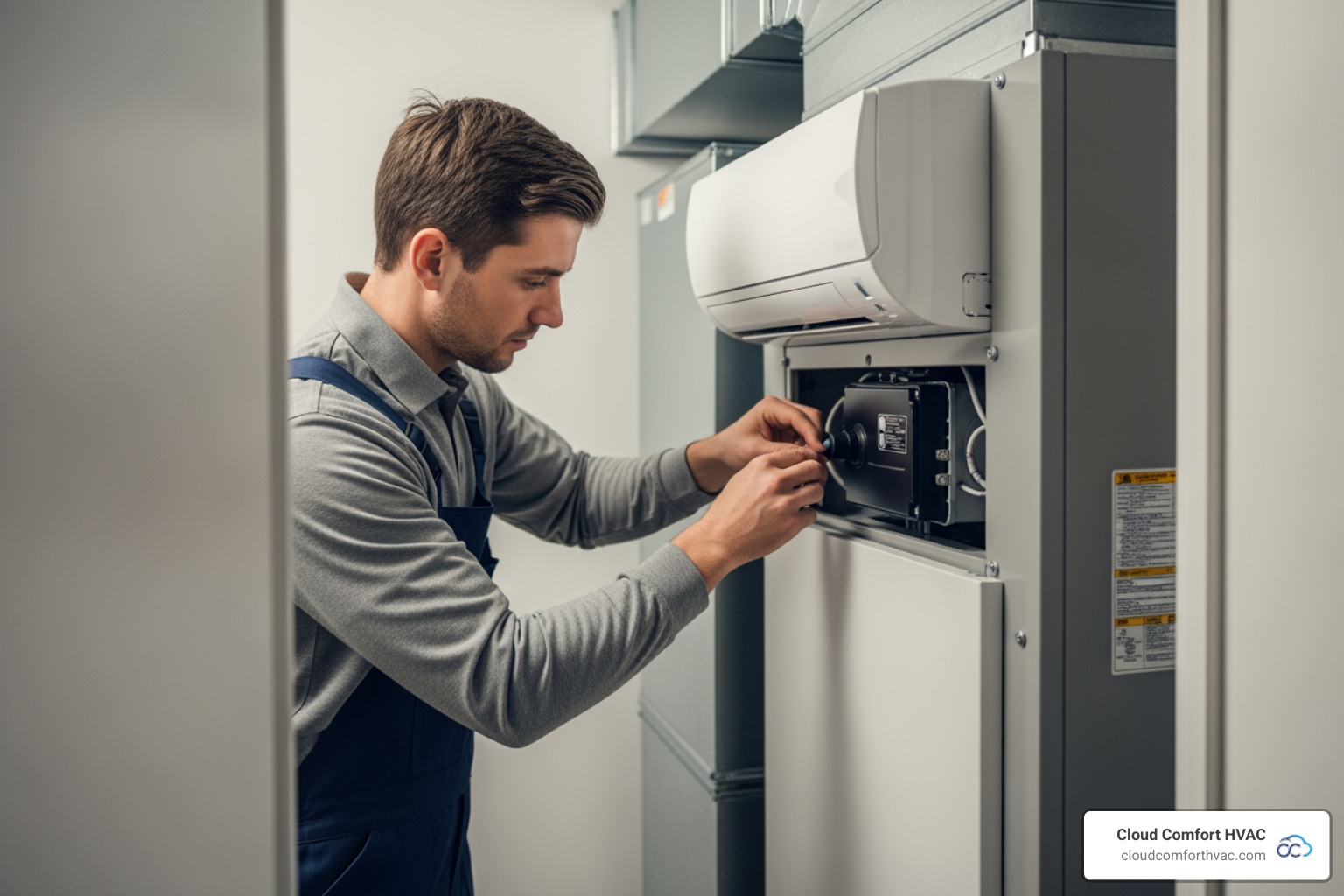
So you've decided to install new HVAC—but what actually happens on installation day? A professional installation is a carefully orchestrated series of steps that ensures your system works safely, efficiently, and reliably. This is why it's a job for licensed technicians, not a weekend DIY project.
Here’s a walkthrough of what to expect.
1. Site Evaluation and Load Calculation: Before starting, our technicians inspect your home, including existing ductwork and insulation. We then perform a precise Manual J load calculation to determine the exact system size your home needs. This is the foundation for a successful installation.
2. Permit Acquisition: Installing a new HVAC system requires permits from your local building department. We handle all this paperwork for you. Skipping permits can lead to fines and issues when selling your home, and may disqualify you from rebates.
3. Old System Removal: Our technicians safely disconnect electrical and gas lines and properly recover refrigerants according to strict environmental regulations. We ensure the old equipment is removed safely and with minimal disruption.
4. New Equipment Placement: The new indoor and outdoor units are positioned for optimal airflow, accessibility for future maintenance, and minimal noise. Every detail is considered for long-term performance.
5. Ductwork Connection: We connect your new equipment to your duct system. If your existing ducts are compromised, we may recommend Air Duct Replacement to maximize your new system's efficiency. Even the best HVAC unit will underperform with leaky ducts.
6. Electrical and Refrigerant Line Setup: This step requires specialized expertise. Our technicians handle all electrical wiring to ensure it is code-compliant and safe. Refrigerant lines are installed, evacuated, and charged to precise manufacturer specifications. Incorrect levels can drastically reduce efficiency and damage the system.
7. System Testing and Calibration: We don't just flip a switch. Our team runs extensive tests to check airflow, refrigerant levels, and electrical connections. We calibrate the thermostat and walk you through your new system's operation, answering any questions you have.
A typical standard system replacement is usually completed in a single day. For comprehensive services, explore our HVAC Installation offerings.
This methodical approach is what separates a quality installation from a potential disaster, ensuring your system works exactly as intended.
The Verdict: Why Professional Installation is Non-Negotiable
When facing a major home improvement project, the temptation to do it yourself is understandable. But when it comes to the decision to install new HVAC, this is one area where going the DIY route can lead to serious problems with safety, performance, and your budget.
Your home's heating and cooling system is complex, involving high-voltage electricity, pressurized refrigerants, and strict building codes. Getting it right is about more than just comfort—it's about protecting your home and your investment.
The Risks of DIY vs. The Value of a Professional
Attempting to install new HVAC on your own is fraught with risks that a professional installer is trained to avoid.
Safety and Compliance: HVAC systems involve high-voltage connections and regulated refrigerants that are hazardous if mishandled. A professional ensures all work is done safely and complies with local building codes in areas like Irvine and Anaheim. We handle all necessary permits and inspections, protecting you from fines and ensuring your system is safe for your family.
Proper Sizing and Performance: Industry experts agree that incorrect sizing is a leading cause of HVAC problems. Without a professional Manual J load calculation, you're just guessing. An undersized system will struggle to keep up, while an oversized one will cycle inefficiently, wasting energy and causing uneven temperatures. A professional guarantees your system is sized correctly for optimal performance.
Warranty Protection: Most HVAC manufacturers require installation by a licensed contractor to keep the warranty valid. A DIY installation means you could be paying out of pocket for any future repairs. Hiring a professional protects your investment and gives you access to both manufacturer and labor warranties, like our exclusive 1-year Comfort Promise. For specialized work like Gas Furnace Installation, this peace of mind is invaluable.
Long-Term Reliability: As industry research confirms, installation quality is often more critical than the equipment brand itself. A properly installed system experiences fewer breakdowns, operates more efficiently, and lasts significantly longer. The expertise and specialized tools of a licensed technician ensure your system delivers the comfort and efficiency it was designed for.
Choosing professional installation is choosing to do the job right the first time. It's an investment in your home's comfort, your family's safety, and your long-term peace of mind.
Frequently Asked Questions about HVAC Installation
We know that deciding to install new HVAC can bring up plenty of questions. Here are some of the most common questions we hear from homeowners, with straightforward answers to help you make an informed decision.
What is the difference between replacing one component vs. the entire system?
When one unit fails, it's tempting to replace only that part. However, replacing the entire system is often the wiser choice, especially if both units are of a similar age. Modern HVAC systems are designed as matched systems, where the indoor and outdoor units are engineered to work together. Mixing a new, high-efficiency unit with an old one creates a performance bottleneck, reduces overall efficiency, and can lead to compatibility issues. Furthermore, manufacturers typically offer more comprehensive warranty coverage for complete matched systems, protecting your investment in the long run.
How can upgrading my HVAC system lead to energy savings?
Upgrading your HVAC system is one of the most effective ways to improve your home's energy efficiency. Today's systems have much higher efficiency ratings (SEER2, AFUE, HSPF2) than models from a decade ago. This means they use significantly less energy to heat and cool your home, leading to lower utility bills. Many modern systems also feature new technology like variable-speed compressors that adjust their output to match your home's real-time needs, further enhancing savings. Paired with a smart thermostat, a new system can optimize energy use for even greater efficiency. Of course, these gains depend on proper sizing and professional installation, which is why a Manual J load calculation is so important. To maintain these savings, follow a regular HVAC maintenance checklist.
Are there rebates or financing available for a new HVAC system?
Yes! Various programs can make a new HVAC system more affordable. These incentives are designed to encourage homeowners to upgrade to more energy-efficient equipment.
Federal and State Incentives: The federal government and the state of California often offer tax credits or rebates for installing ENERGY STAR®-qualified systems, especially high-efficiency heat pumps.
Utility Programs: Many local utility companies in Los Angeles, Orange County, and our other service areas offer their own rebate programs for customers who upgrade their HVAC systems.
Financing Options: We offer flexible financing plans that allow you to spread the investment over time, making it easier to fit a new system into your budget.
We can help you steer these programs to maximize your savings on a new, energy-efficient HVAC system.
Conclusion: Ensure Your Comfort with Expert Installation
When you decide to install new HVAC, you're making a vital investment in your family's comfort and your home's value. It's about creating an environment where everyone feels at ease, energy bills are manageable, and your system works reliably when you need it most.
We've covered the signs that it's time for a replacement, the different systems available, and the critical importance of professional installation. The process requires specialized expertise, precise calculations, and adherence to strict safety codes—it's not an area for compromise.
At Cloud Comfort HVAC, we've built our reputation on delivering expert, eco-friendly HVAC solutions throughout Southern California. Whether you're in Los Angeles, Irvine, or Anaheim, our team is committed to precision and long-term reliability. We believe your home deserves a thoughtfully designed system perfectly matched to your needs.
Our focus on energy-efficient solutions means your new system will keep you comfortable while delivering savings on your utility bills. We back our work with transparent pricing, a high Google rating, strong Daikin warranties, and our unique 1-year Comfort Promise. When you choose us, you're getting a partnership with a team that cares about your comfort.
Don't leave your home's climate control to chance. Invest in professional expertise and experience the difference a quality installation makes.
Ready to bring unparalleled comfort and efficiency to your home? Contact us for your heat pump installation today and let's create the perfect indoor environment for you and your family.
Have an HVAC or plumbing question?
Our Torrance comfort experts are here to help — no pressure, just honest answers.
Ask an Expert