Cracked Heat Exchanger Symptoms and Safety Risks in a Southern California Home: 5 Critical Warning Signs
June 26, 2026

Why Cracked Heat Exchanger Symptoms and Safety Risks in a Southern California Home Deserve Immediate Attention
Understanding cracked heat exchanger symptoms and safety risks in a Southern California home could be the difference between a safe household and a dangerous carbon monoxide emergency. According to the CDC, accidental CO poisoning causes over 20,000 emergency room visits and more than 400 fatalities in the United States every year — and a cracked heat exchanger is one of the most common household sources of that risk.
Here is a quick summary of the key symptoms and risks to know:
Key symptoms of a cracked heat exchanger:
- Yellow or flickering burner flames instead of a steady blue flame
- Black soot buildup near the furnace burners or flue
- A chemical, metallic, or formaldehyde-like odor when the furnace runs
- Carbon monoxide detector alarm or readings above 30 ppm
- Household members experiencing headaches, dizziness, or nausea that improve when leaving home
- Water or moisture pooling near the base of the furnace
- Furnace shutting off repeatedly (short cycling)
Key safety risks:
- Carbon monoxide leaking directly into your home's breathing air
- Increased fire hazard from escaped combustion gases
- Reduced furnace efficiency and risk of overheating
Even in Southern California's mild climate, gas furnaces run regularly enough during cooler months to develop serious wear — and a cracked heat exchanger can go undetected without the right warning signs or professional inspection.
What is a Heat Exchanger and Why is it Critical for Furnace Safety?
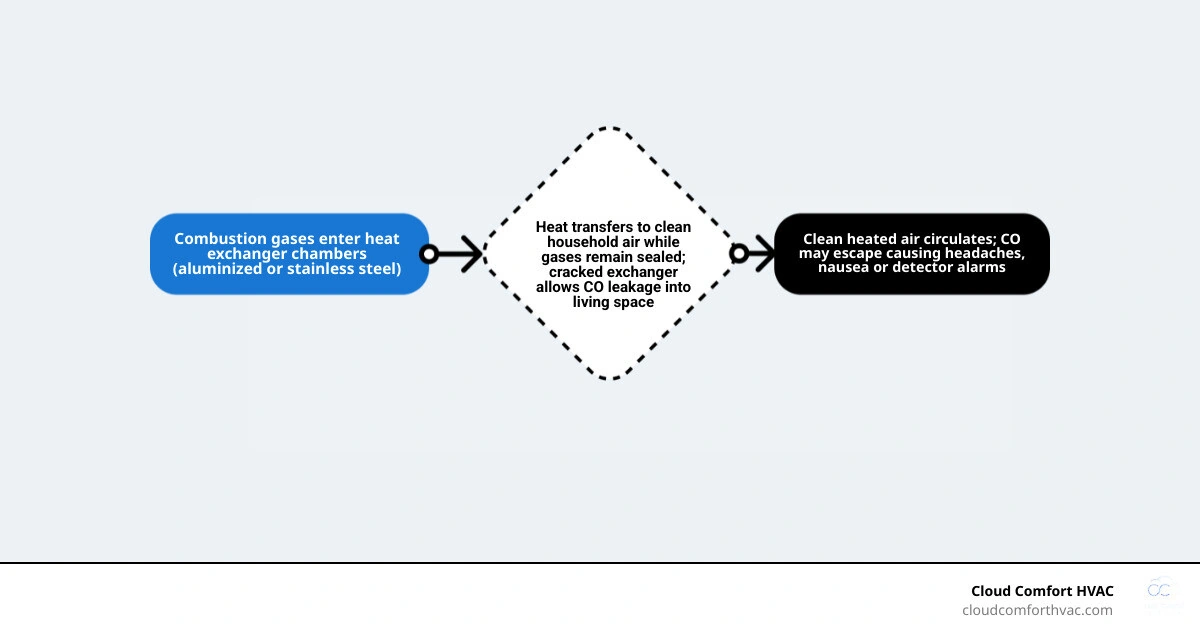
At the heart of every gas furnace sits a series of curved metal chambers known as the heat exchanger. Typically constructed from heavy-duty aluminized steel or stainless steel, this component has a single, incredibly important job: transferring heat from combustion gases to the clean air circulating throughout your home, while keeping those two airstreams completely separate.
When your thermostat calls for heat, your furnace ignites natural gas or propane inside the heat exchanger. This process creates intense heat alongside a toxic mix of combustion byproducts, including carbon monoxide (CO), sulfur dioxide, and nitrous oxide. As the metal walls of the heat exchanger warm up, your furnace blower motor blows cold indoor air across the outside of these metal chambers. The air absorbs the heat and is pushed through your ductwork to warm your living spaces. Meanwhile, the dangerous exhaust gases inside the heat exchanger are safely vented out of your home through a flue pipe.
If the heat exchanger remains sealed, your indoor air quality stays perfectly safe. However, because the metal must rapidly heat up and cool down during every single cycle, it experiences constant physical stress. Over the course of 15 to 20 years, this continuous expansion and contraction can lead to metal fatigue, eventually causing a crack or split.
When a crack develops, the safety barrier is compromised. Because the blower fan creates positive pressure on the outside of the heat exchanger, it can actually force air into the crack, disrupting the burner flame. This disruption leads to incomplete combustion, which generates significantly higher levels of toxic carbon monoxide. Alternatively, when the furnace cycles off, these toxic gases can seep directly into the air ducts, distributing odorless, colorless poison to every room in your home. This is why a cracked heat exchanger is considered one of the most severe Common Heating System Problems a homeowner can face.
Cracked Heat Exchanger Symptoms and Safety Risks in a Southern California Home
Recognizing the early warning signs of a failing heat exchanger can prevent a minor heating issue from turning into a life-threatening emergency. Because carbon monoxide is entirely invisible and odorless, you must rely on other physical, visual, and auditory indicators to spot a problem.
Here are the most common symptoms to look out for:
- A Yellow, Flickering Flame: A healthy furnace burner should produce a steady, crisp blue flame. If you peer through the furnace's inspection window and see a weak, dancing, or bright yellow flame, it is a primary indicator of incomplete combustion. This often happens because a crack is allowing air from the blower fan to disturb the burners.
- Soot Buildup: Soot is a physical byproduct of incomplete combustion. If you notice black carbon deposits forming near the burners, inside the furnace cabinet, or around the exhaust flue, your heat exchanger is likely damaged.
- Metallic or Chemical Odors: A cracked heat exchanger can release a strong, unpleasant smell that many homeowners describe as metallic, chemical, or similar to formaldehyde. This odor is caused by aldehydes, which are byproducts of incomplete gas combustion.
- Carbon Monoxide Alarms: If your home's CO detectors start sounding, do not treat it as a false alarm. Any reading above 30 ppm on a low-level monitor warrants immediate professional attention.
- Unexplained Health Symptoms: If family members experience chronic headaches, dizziness, nausea, burning eyes, or flu-like symptoms that miraculously disappear when you leave the house, carbon monoxide is likely present in your indoor air.
- Water Pooling Near the Furnace: While high-efficiency condensing furnaces produce condensation naturally, an unexpected pool of water around a standard furnace can indicate a rusted, cracked, or failing heat exchanger assembly.
- Strange Noises: As metal cracks and splits, the expansion and contraction cycles can produce loud popping, rattling, or banging sounds shortly after the furnace starts up.
To help you quickly distinguish between a normal, healthy heating system and one that presents serious risks, keep these key differences in mind:
| Feature / Operational Aspect | Normal Furnace Operation | Cracked Heat Exchanger Symptoms |
|---|---|---|
| Burner Flame Appearance | Steady, crisp, distinct blue flame | Flickering, lazy, dancing yellow or orange flame |
| Soot and Debris | Clean burners with no visible carbon buildup | Black soot deposits inside the cabinet or around vents |
| System Aromas | No noticeable smell (except a brief dusty smell at seasonal startup) | Pungent chemical, metallic, or formaldehyde-like odors |
| CO Detector Status | Silent, displaying 0 ppm | Alarm sounding or displaying elevated carbon monoxide levels |
| Household Health | Family feels comfortable and alert | Unexplained headaches, nausea, fatigue, or eye irritation |
| Furnace Cycle Behavior | Smooth operation until target temperature is met | Frequent short cycling or tripping the flame rollout sensor |
If you notice any of these alarming red flags in your home, it is crucial to consult a professional immediately. For more detailed visual cues, check out our guide on 5 Signs You Need to Fix Your Heater.
What Causes Heat Exchangers to Crack in Southern California?
It might seem counterintuitive that homes in sunny Southern California would experience cracked heat exchangers. After all, our winters in coastal areas like Manhattan Beach, Torrance, and Rancho Palos Verdes are incredibly mild compared to the freezing East Coast. However, the unique way we use our heating systems actually contributes to specific failure patterns.
The primary physical driver behind a cracked heat exchanger is thermal expansion and metal fatigue. Every time your furnace turns on, the heat exchanger reaches temperatures of several hundred degrees, causing the metal to expand. When the cycle ends, the metal cools and contracts. Over many years, this physical flexing weakens the steel, eventually causing stress cracks.
However, several factors can drastically accelerate this process:
- Restricted Airflow: This is the number-one killer of heat exchangers. When your system cannot breathe, heat builds up inside the furnace cabinet. The heat exchanger gets much hotter than it was designed to handle, causing the metal to expand beyond its limits. Overheating leads to rapid metal fatigue and premature cracking.
- Dirty Air Filters: A simple clogged filter blocks return air, trapping extreme heat inside the furnace and baking the heat exchanger.
- Oversized Furnaces: Many older homes in Los Angeles and Orange County have furnaces that are far too large for the property's actual heating needs. An oversized furnace heats the home too quickly and shuts off, a process called short cycling. This constant, rapid cycling causes extreme thermal shock to the metal.
- Corrosion and Rust: Moisture is a major enemy of steel. If your furnace is located in a damp crawlspace or a garage near the ocean (such as in Huntington Beach or Redondo Beach), salt-heavy coastal air can accelerate rust. Additionally, combustion gases naturally contain water vapor; if the furnace short-cycles, the flue gases never get hot enough to vent properly, causing acidic condensation to pool inside the heat exchanger and rust it from the inside out.
To avoid these costly issues, keeping up with regular maintenance is vital. Read more about the importance of proactive care in What Every Homeowner Needs to Know About Furnace Repair.
Understanding Cracked Heat Exchanger Symptoms and Safety Risks in a Southern California Home
In Southern California, our furnaces often sit completely dormant for eight to nine months out of the year. During these long periods of inactivity, dust, pet dander, and ocean humidity settle inside the furnace cabinet.
When November or December finally arrives and we turn the heater on for the first time, this accumulated dust acts as an insulating blanket, severely restricting airflow and causing immediate thermal stress. Furthermore, the coastal moisture can cause microscopic rust pits to form on the heat exchanger while it sits idle. Once the heating season starts, the expanding metal pulls against these weakened, rusty spots, turning minor corrosion into full-fledged cracks. This is why regular autumn tune-ups are so critical for homeowners in beachside communities like Palos Verdes Estates and Hermosa Beach.
Professional Diagnostics and Repair vs. Replacement Decisions
If you suspect your furnace has a problem, it is critical to call in a professional HVAC technician who uses precise diagnostic tools. A visual inspection alone is rarely enough, as many cracks are microscopic or hidden deep within the heat exchanger's clamshell folds.
A comprehensive professional diagnosis should include:
- Combustion Analysis: The technician should insert a calibrated combustion analyzer probe into the exhaust flue. This tool measures the exact ratio of oxygen, carbon dioxide, and carbon monoxide. If the oxygen levels drop or carbon monoxide levels spike when the indoor blower fan kicks on, it proves that air is leaking through a crack in the heat exchanger.
- Infrared Snake Camera Inspection: Specialized, flexible cameras allow technicians to look deep inside the dark, narrow channels of the heat exchanger to visually document cracks, separated joints, or rust holes.
- Flame Rollout and Behavior Observation: The technician will watch the burner flames as the blower fan starts up. If the flame dances, flickers, or blows backward out of the burner chamber (tripping the flame rollout safety switch), a crack is almost certainly present.
How to Spot and Avoid Sales Scams
Unfortunately, the "cracked heat exchanger" is a notorious scare tactic used by dishonest contractors to push unnecessary equipment replacements. Because a crack is a legitimate safety emergency, some technicians will claim a furnace is "condemned" to force a sale.
To protect yourself:
- Ask to see the evidence: A reputable technician will gladly show you the physical crack on a camera screen, point out the flame disturbance in real-time, or show you the exact digital readings on their combustion analyzer. If they refuse to show you proof, do not sign anything.
- Get a second opinion: If a technician tells you your furnace must be replaced immediately but cannot show you clear, indisputable proof, turn off the system and call another licensed company for a second opinion.
Why Repairs Aren't an Option
When a heat exchanger cracks, it cannot be repaired. You cannot weld, patch, or tape a cracked heat exchanger. The extreme temperatures and physical expansion would cause any weld or patch to fail almost immediately, posing an unacceptable safety hazard.
Your only options are to replace the heat exchanger itself or replace the entire furnace. If your furnace is under a manufacturer warranty (such as Daikin’s robust heat exchanger warranties), replacing just the component might make sense, though you will still need to cover the labor costs. However, if your furnace is more than 10 to 12 years old, replacing the entire system is usually the most financially sensible decision. To help weigh your options, read our detailed comparison on Furnace Replacement vs. Furnace Repair: Which is Right for You?.
How to Address Cracked Heat Exchanger Symptoms and Safety Risks in a Southern California Home
If you suspect a cracked heat exchanger or if your carbon monoxide detector sounds, you must take immediate action to protect your household:
- Shut Down the System: Turn off the furnace at the thermostat immediately.
- Turn Off the Gas: Locate the gas shutoff valve next to your furnace and turn it to the "off" position (perpendicular to the pipe).
- Ventilate Your Home: Open windows and doors to let fresh air circulate and clear out any potential gas buildup.
- Evacuate If Necessary: If anyone is experiencing headaches, dizziness, or nausea, or if your CO alarm is actively sounding, evacuate the home immediately and call 9-1-1.
- Schedule a Professional Inspection: Do not attempt to turn the furnace back on until a licensed technician has thoroughly inspected and cleared the system.
For fast, reliable assistance, you can book an inspection through our Gas Furnace Repair Services page to ensure your home remains completely safe.
Conclusion
A cracked heat exchanger is a serious safety concern that should never be ignored. While Southern California homeowners don't rely on their heaters year-round, ensuring your system is safe, efficient, and free of carbon monoxide risks before the cooler months arrive is essential for peace of mind.
At Cloud Comfort HVAC, we provide expert, eco-friendly heating and cooling solutions across Los Angeles and Orange County. Whether you need a routine seasonal tune-up, a second opinion on a diagnosed crack, or a complete system upgrade, our team is dedicated to keeping your home safe and comfortable. We proudly serve homeowners in Torrance, Manhattan Beach, Rancho Palos Verdes, Culver City, Carson, and the surrounding areas with transparent pricing, exceptional workmanship, and reliable warranties.
Don't leave your family's safety to chance. If you suspect your heating system is experiencing issues, contact us today to schedule our professional Gas Furnace Repair Services and let our expert team restore your home's comfort and safety.
Have an HVAC or plumbing question?
Our Torrance comfort experts are here to help — no pressure, just honest answers.
Ask an Expert