Do You Need a Permit to Install a Ductless AC System in California? 2026 Guide
June 18, 2026

What California Homeowners Need to Know Before Installing a Ductless AC System
Do you need a permit to install a ductless AC system in California? In most cases, yes — and understanding the rules before you start can save you from costly fines, failed inspections, and headaches down the road.
Quick Answer:
| Situation | Permit Required? |
|---|---|
| New mini-split installation (any California city) | Yes, in most cases |
| Replacement of existing mini-split | Yes |
| New electrical circuit for mini-split | Yes |
| Refrigerant line installation | Yes |
| Drilling through exterior walls | Yes |
| Repair work only (no equipment change) | No |
| Plug-in window unit (120V, no dedicated circuit, no structural changes) | No |
California building codes treat ductless mini-split systems as permanent mechanical equipment. That means they fall under the California Mechanical Code, local electrical codes, and the state's Title 24 energy standards — all of which typically require a permit before any work begins.
Whether you're upgrading comfort in your main home, adding cooling to a new ADU, or replacing an aging unit, the permitting rules apply. And as of June 2026, California's regulatory landscape is more structured than ever, with new statewide legislation actively shaping how permits are issued, what they cost, and how quickly local governments must process them.
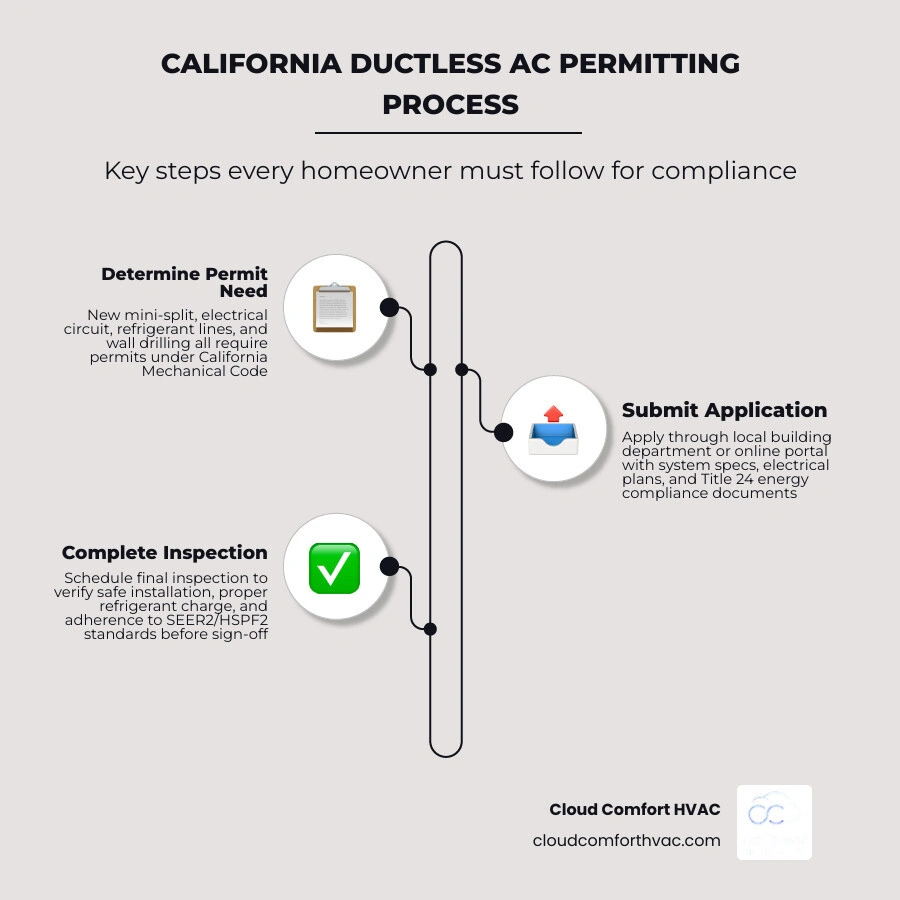
Do You Need a Permit to Install a Ductless AC System in California?

The short answer is yes. Under the California Mechanical Code (CMC) and the National Electrical Code (NEC), permanently installed heating and cooling systems require official oversight. Because a ductless mini-split relies on both high-voltage electrical connections and pressurized refrigerant lines, local building departments must verify that the installation is safe, efficient, and compliant with state environmental laws.
When we install a system, we aren't just placing equipment inside your home. We are making structural modifications, running new dedicated electrical lines, and handling chemical refrigerants. To ensure everything is up to code, local municipalities require a combination of mechanical and electrical permits.
These permits ensure that the system does not overload your home's electrical panel, leak refrigerant into the environment, or compromise the structural integrity of your walls. If you are considering upgrading your home's comfort, you can read more about your options in our comprehensive guide on California Mini Splits, Ductless Heat Pumps & ACs.
When is a Permit Required for a California Mini-Split?
A building permit is triggered by several specific aspects of a ductless mini-split installation:
- New Electrical Circuits: Mini-splits require a dedicated 208/230V electrical circuit run directly from your main electrical panel to the outdoor condenser. Any new electrical wiring or breaker installation automatically requires an electrical permit.
- Refrigerant Line Installation: The lines carrying refrigerant between the indoor air handler and the outdoor condenser must be safely run, insulated, and tested for leaks.
- Exterior Wall Penetrations: To connect the indoor and outdoor units, technicians must drill a hole through your home’s exterior wall to route the refrigerant lines, condensate drain, and control wiring. This structural penetration requires mechanical and building oversight.
- Permanent Mechanical Equipment: Because the outdoor condenser is mounted permanently on a concrete pad or wall bracket, it is classified as a permanent mechanical fixture, which falls under local zoning and setback codes.
When Do You Need a Permit to Install a Ductless AC System in California for an ADU?
Accessory Dwelling Units (ADUs) have exploded in popularity across Southern California, from Culver City to Huntington Beach. If you are building or converting an ADU, you might wonder if the permitting rules are different.
The answer remains a definitive yes. In fact, permitting for an ADU is often even more strictly scrutinized. Because ADUs are classified as independent living spaces, they must comply with rigorous Title 24 energy standards. A mini-split is often the ideal choice for an ADU because it provides highly efficient, independent zone heating and cooling without requiring bulky ductwork.
However, local building inspectors will verify that the mini-split system is properly sized for the ADU's square footage and meets all local noise and setback ordinances. To learn more about how these systems function in smaller spaces, check out our guide on Ductless Mini Split Installation and Repair in California.
California Building Codes and Title 24 Energy Standards
California is known for having some of the strictest energy efficiency regulations in the United States. The state’s Title 24 Energy Code is updated regularly to push for lower carbon emissions and reduced energy consumption. As of June 2026, the current energy code mandates strict efficiency minimums for all new air conditioning and heat pump installations.
When we install a ductless system in areas like Torrance or Palos Verdes Estates, the equipment must meet specific SEER2 (Seasonal Energy Efficiency Ratio 2) and HSPF2 (Heating Seasonal Performance Factor 2) ratings. Additionally, California law requires Home Energy Rating System (HERS) testing for many HVAC alterations.
While ductless mini-splits are often exempt from duct-leakage testing (since they don't have ducts!), they still require refrigerant charge verification by a certified third-party HERS rater to ensure the system is operating at peak efficiency. While you do not need to worry about the technical details of how your installation team qualifies to do this work, working with a fully licensed professional is essential. You can learn more about the strict standards required of local installers in our overview of the California HVAC License: How to Get Certified.
Another major factor in the current regulatory landscape is the industry-wide transition to low-GWP (Global Warming Potential) A2L refrigerants. These safer, more eco-friendly refrigerants require specialized handling and safety designs, which local building inspectors will verify during the final inspection.
Streamlined Permitting Under California SB-282 and SB-222
Fortunately, the California legislature has recognized that complex permitting processes can slow down the adoption of eco-friendly heat pump technology. To combat this, Senate Bills SB-282 and SB-222 were enacted to streamline the permitting process across the state.
Under these laws, local jurisdictions are required to:
- Implement Online, Automated Permitting: Cities and counties must offer simplified, automated online portals to approve permits for residential heat pump and mini-split installations quickly.
- Limit Permit Fees: The state has placed strict statutory caps on municipal permit fees for residential heat pump installations, ensuring that local governments cannot charge excessive fees that discourage energy-efficient upgrades.
- Offer Asynchronous Inspections: To prevent homeowners from having to wait around all day for a building inspector, municipalities must allow virtual or asynchronous inspections where contractors can submit photo and video evidence of code compliance.
- Override HOA Restrictions: These laws explicitly void any homeowner association (HOA) bylaws or deed restrictions that attempt to prohibit the installation of energy-efficient heat pumps or mini-splits.
The Risks of Skipping the Permitting Process
It can be tempting to bypass the permitting process to save time, but skipping this step carries significant financial and legal risks.
- Local Building Department Fines: If your local city code enforcement discovers unpermitted work, they can issue heavy fines, halt construction, and force you to pay double or triple the original permit fees.
- Required Equipment Removal: In worst-case scenarios, if an unpermitted installation violates local setback rules or structural codes, the city can force you to completely remove the system at your own expense.
- Home Resale Complications: When you sell a home in California, you must disclose all home improvements. Savvy buyers and home inspectors will check city records. Unpermitted HVAC work can stall a sale, force you to obtain retroactive permits, or require you to lower your asking price.
- Homeowner Insurance Denial: If an unpermitted electrical connection causes a fire or a system leak causes structural damage, your homeowner’s insurance policy may deny your claim entirely, leaving you personally liable for the damages.
- Voided Manufacturer Warranties: Major manufacturers require professional, permitted installation by licensed contractors to keep their warranties active. If you cannot prove the system was legally installed and inspected, you may lose your warranty protection.
Do you need a permit to install a ductless ac system in california for a DIY project?
Yes. Many online retailers sell "DIY" mini-split kits that come pre-charged with refrigerant, leading some homeowners to believe they can install them without a permit. This is a common misconception.
Even if you do the work yourself, California law still mandates that you obtain building, electrical, and mechanical permits. Furthermore, handling refrigerants legally requires EPA Section 608 certification. If a DIY system requires any modifications to the refrigerant lines, or if you must recover refrigerant from an old system during a replacement, you must hire a certified technician by law. Attempting a DIY installation without a permit exposes you to all the risks listed above, plus the added danger of electrical shock or system failure from improper installation.
Frequently Asked Questions About California Ductless AC Permits
Navigating local building codes can be confusing, as requirements can vary slightly depending on whether you live in Los Angeles, Carson, or Hermosa Beach. Here are the answers to some of the most common questions we receive.
Who is responsible for obtaining the permit—the homeowner or the contractor?
As the homeowner, you are ultimately responsible for ensuring your property is compliant with local laws. However, when you hire a professional HVAC company, the contractor should handle the entire permitting process on your behalf.
A reputable contractor will "pull" the permit under their license, submit the necessary technical drawings and load calculations to the city, and coordinate the final inspection. Be wary of any contractor who asks you to pull an "owner-builder" permit, as this transfers all legal liability for code compliance and safety directly to you. For advice on selecting a trustworthy partner, read our guide on How to Find the Right Heating and Cooling Contractor in California.
How does the permit approval and inspection process work?
The permit process generally follows four straightforward steps:
- Application: Your contractor submits the permit application, equipment specifications, and a basic site plan showing where the indoor and outdoor units will be placed.
- Approval: Thanks to streamlined state laws, many local building departments approve these simple mechanical permits online within a few business days.
- Installation: The licensed HVAC team installs the mini-split system, ensuring all electrical wiring, refrigerant lines, and structural penetrations meet local codes.
- Inspection: Once the installation is complete, a city inspector (or a virtual asynchronous system) reviews the work to verify that the electrical breaker is correctly sized, the outdoor unit meets setback rules, and the system is operating safely.
Are plug-in window heat pumps exempt from permits in California?
Yes, plug-in window heat pumps or portable room air conditioners are generally exempt from permitting requirements. To qualify for this exemption, the unit must be self-contained, operate on a standard 120V outlet, require no dedicated electrical circuit or panel upgrades, and require no permanent structural modifications or drainage systems. However, these temporary units are far less efficient and durable than a permanently installed ductless mini-split system.
Conclusion
Installing a ductless AC system is one of the smartest investments you can make for your home's comfort and energy efficiency. While the permitting process in California might seem daunting, it is designed to protect your safety, your property value, and the environment. By working with a licensed, experienced professional, you can enjoy all the benefits of a modern mini-split system without any of the regulatory stress.
At Cloud Comfort HVAC, we specialize in providing seamless, code-compliant ductless installations across Southern California, including Torrance, Palos Verdes Estates, Carson, and Culver City. We handle the entire permitting and inspection process from start to finish, ensuring your new system meets all local codes and Title 24 standards.
Ready to upgrade your home comfort with complete peace of mind? Schedule your professional ductless AC installation in Manhattan Beach, CA today and let our expert team handle the details for you.
Have an HVAC or plumbing question?
Our Torrance comfort experts are here to help — no pressure, just honest answers.
Ask an Expert